


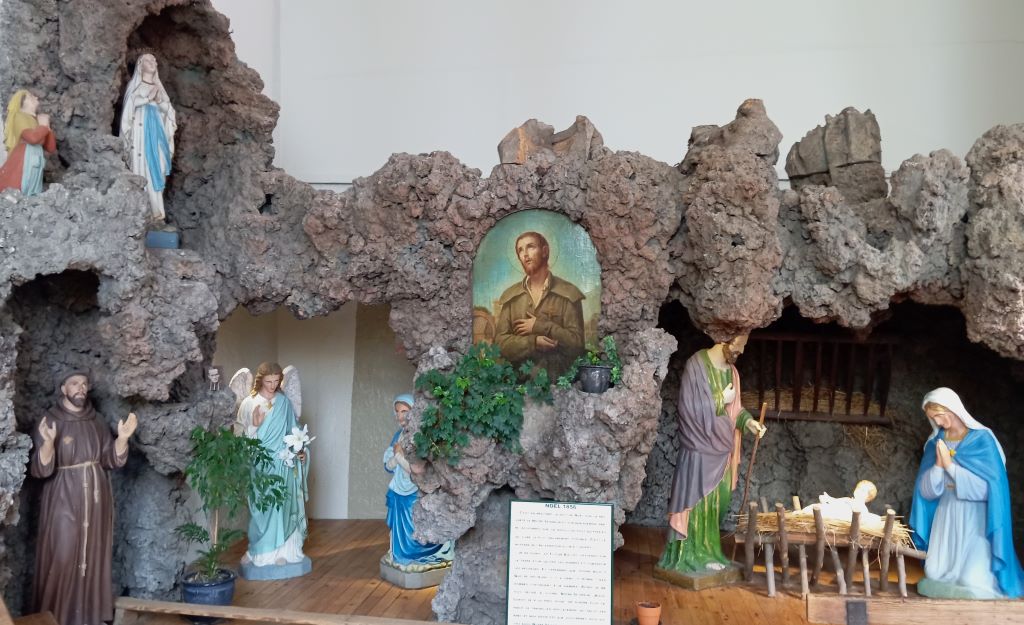
« It was the mystery of Christmas that turned me to the faith »says the Father Chevrier.
That is why this festival is of great importance in the tradition of Prado.
Fathers Diego MARTÍN PEÑAS (General Manager), Luc LALIRE (1er assistant) and Joseph NIKIEMA (2th (assistant) share with you the Christmas letter 2025 addressed to all Prado residents around the world.
The letter is available in French, Spanish, Italian, Portuguese, English, Malagasy, Arabic, Vietnamese and coming soon in Korean. To download it, click on the link or the corresponding image below.
Enjoy the read and please feel free to share the message the permanent staff at the Prado Général with your family and friends.
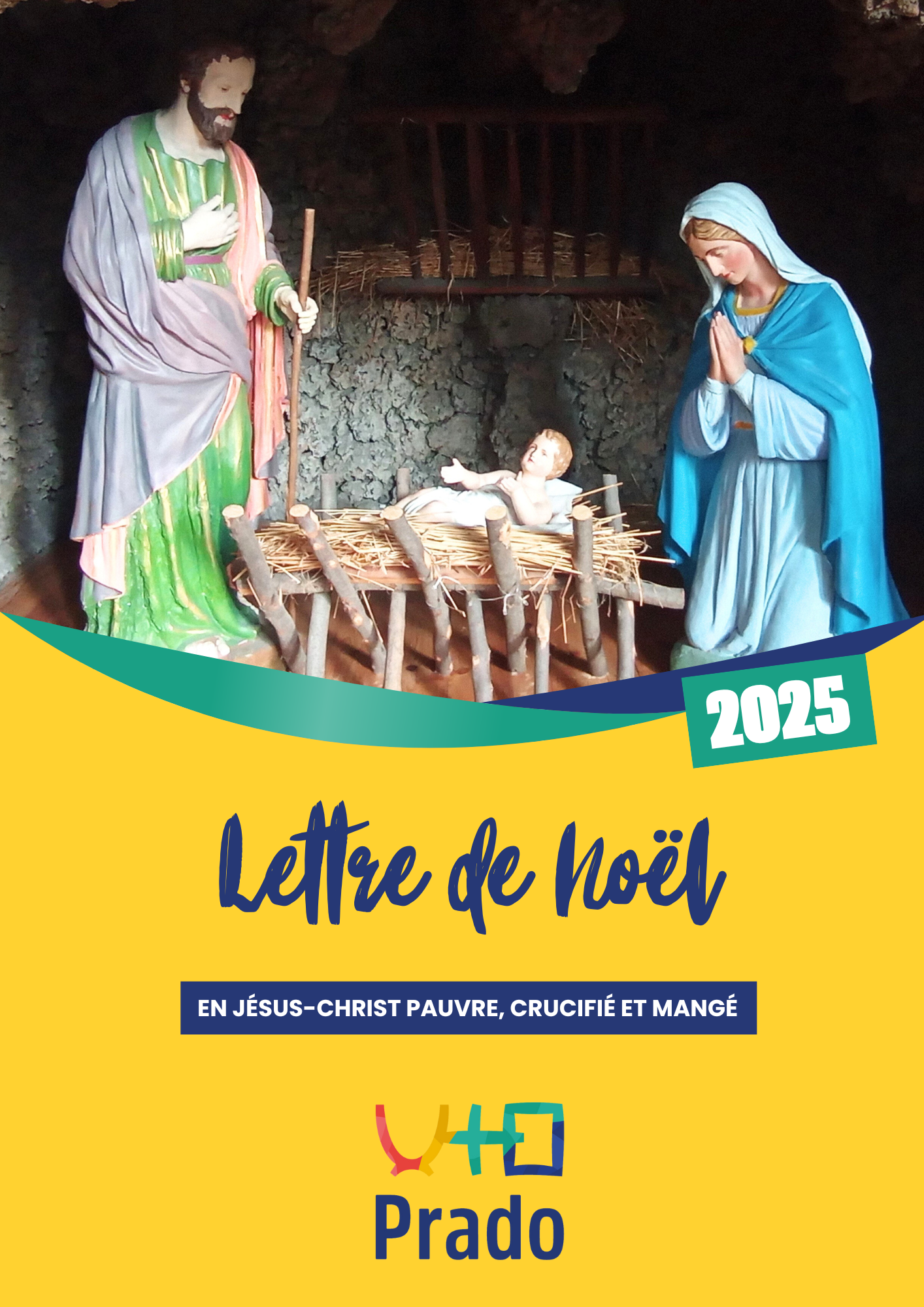
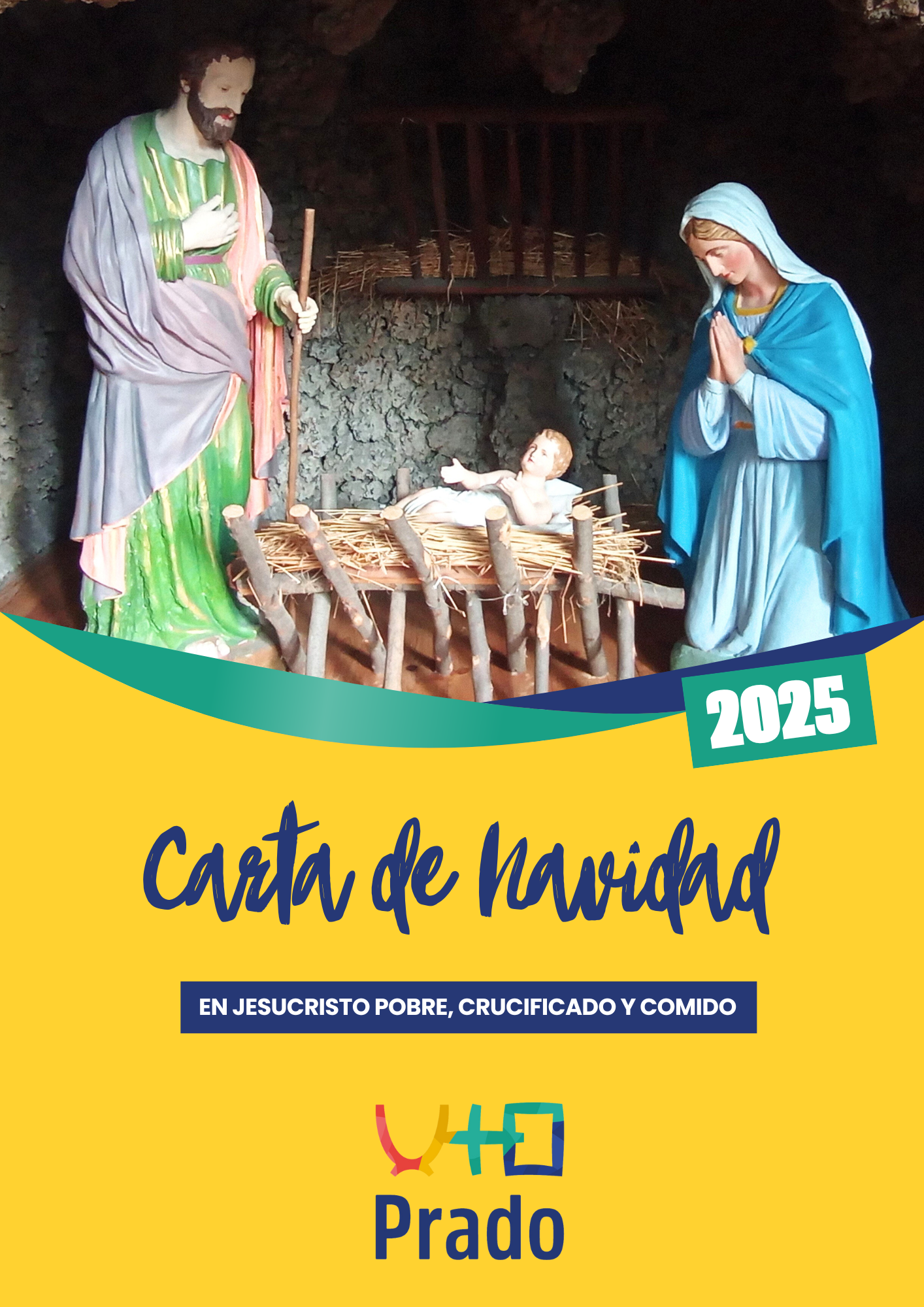
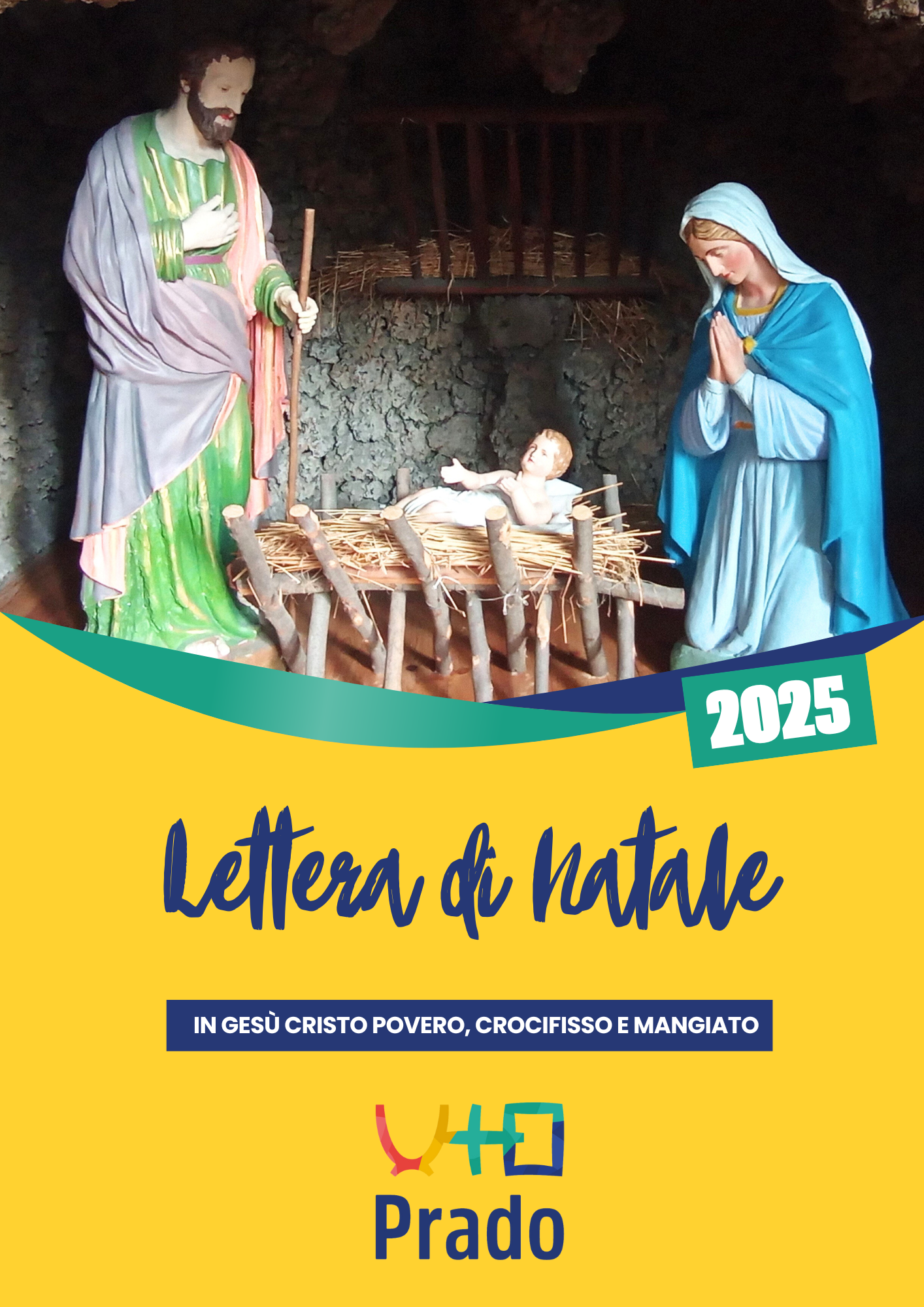
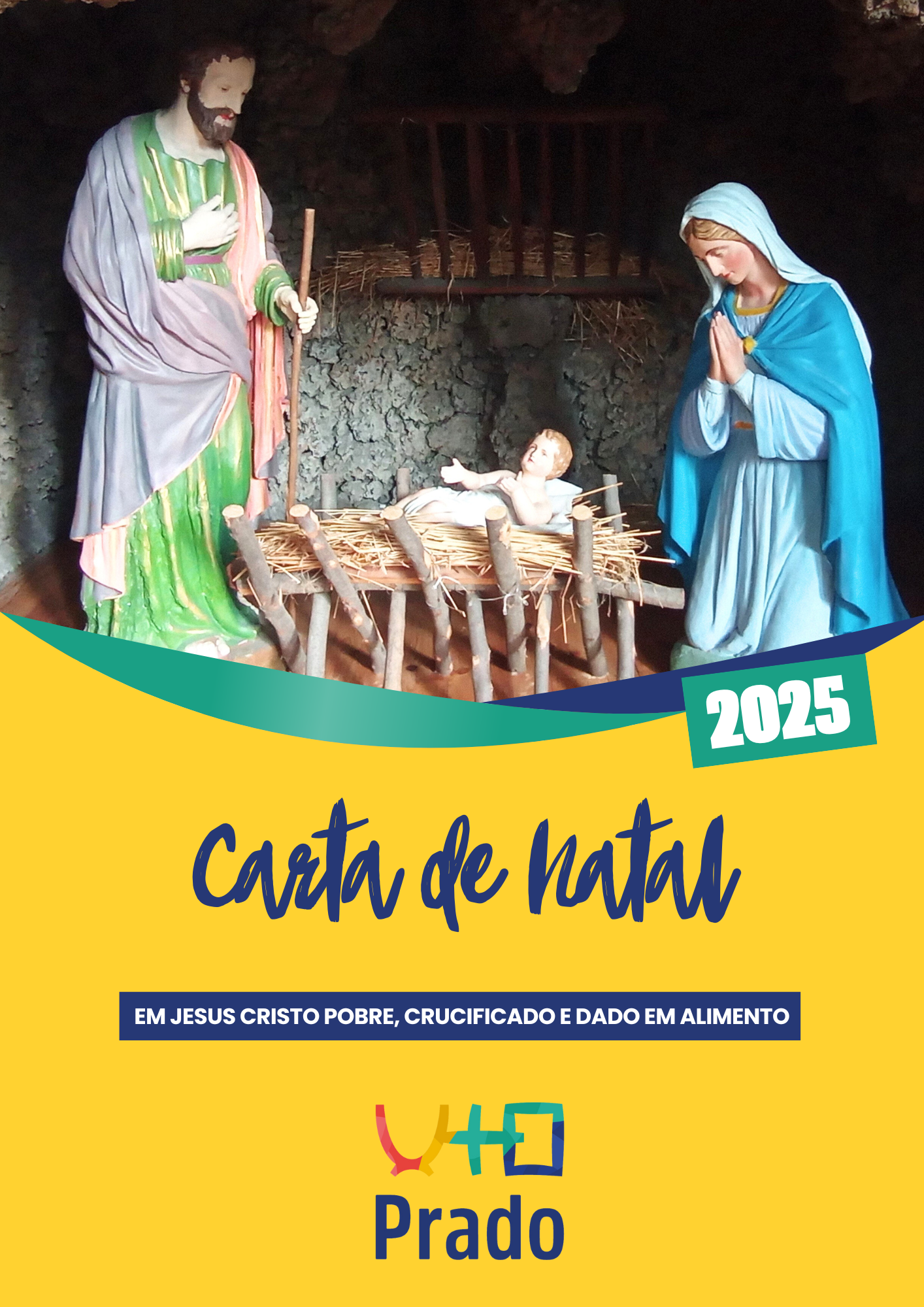
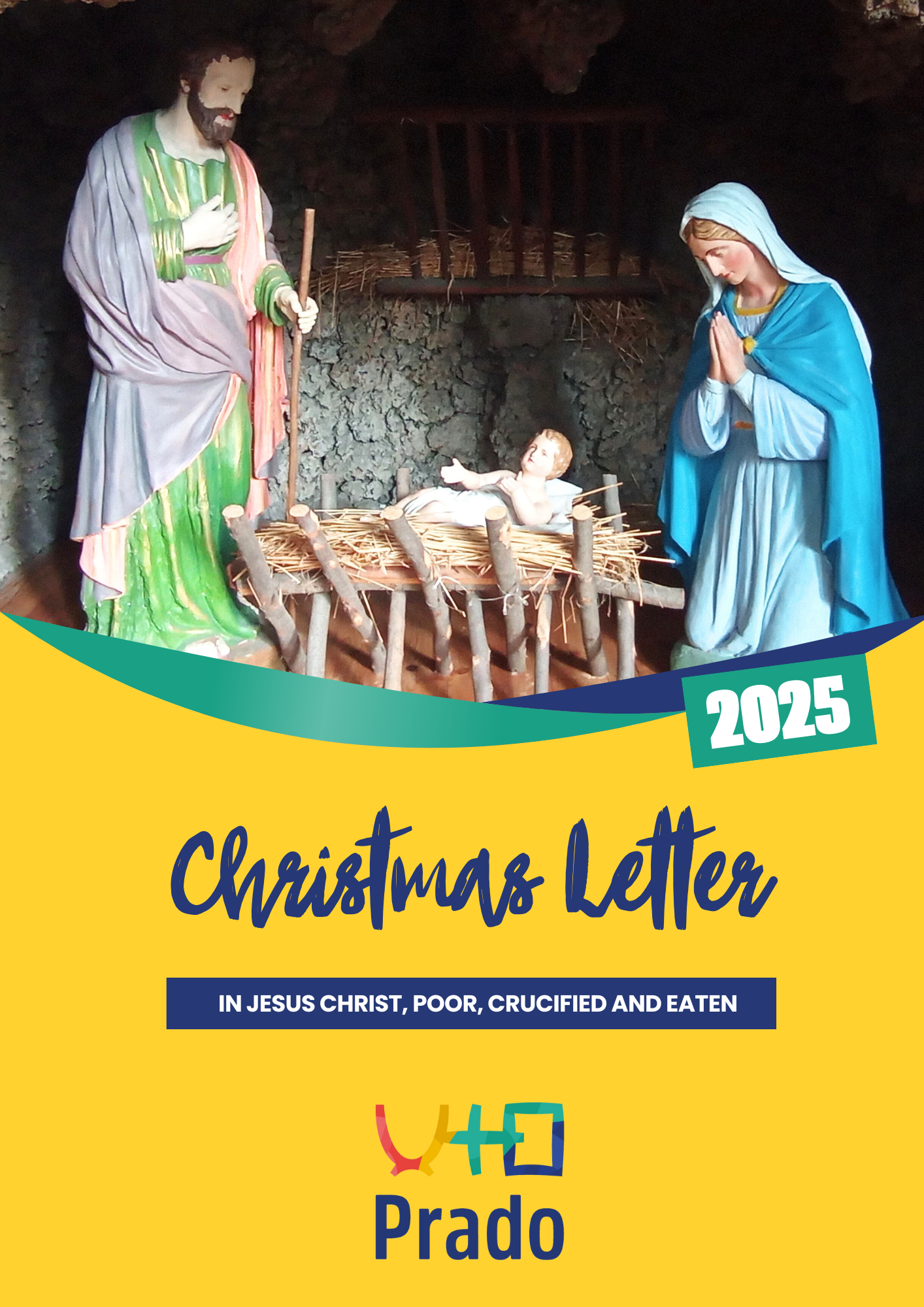
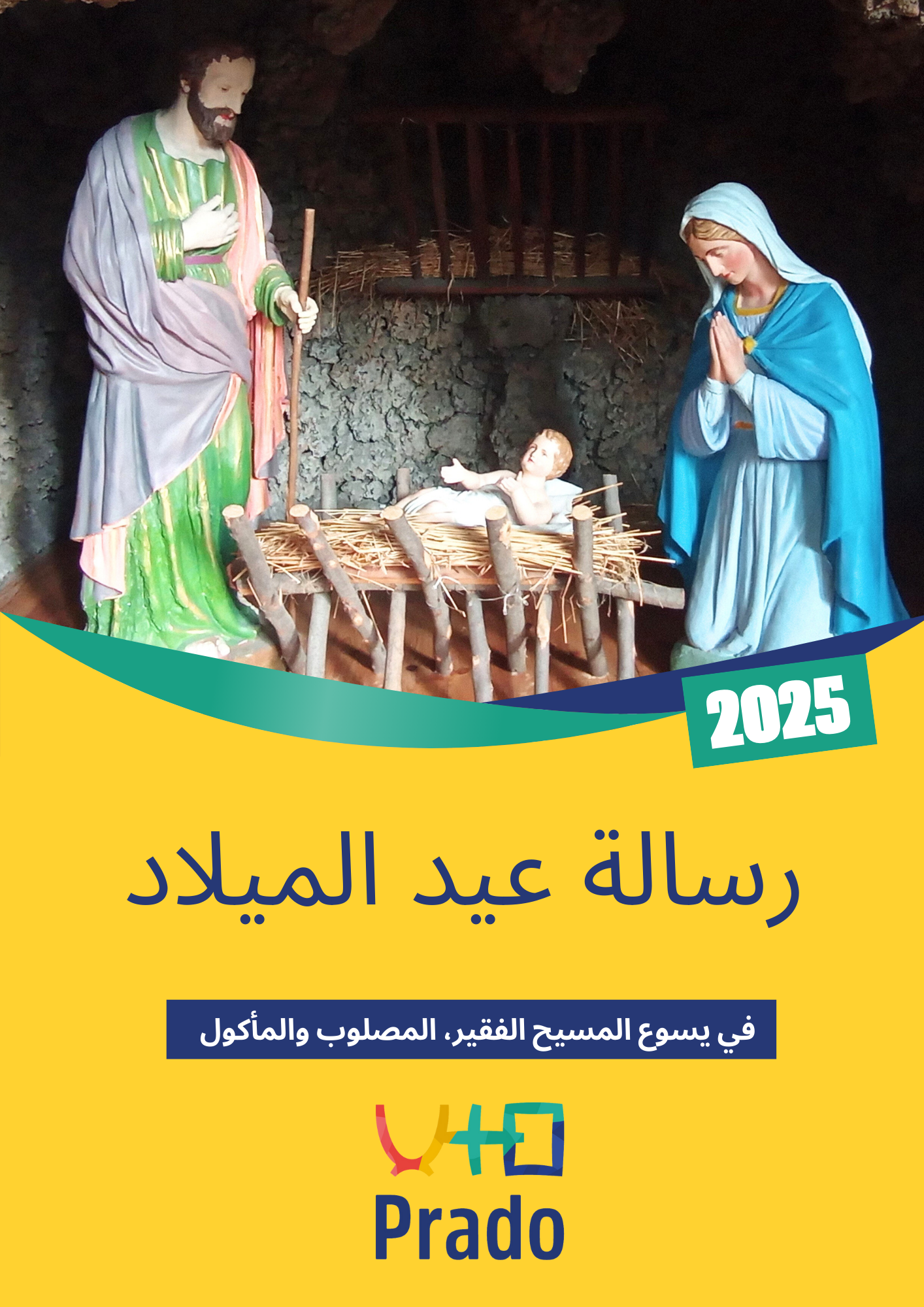
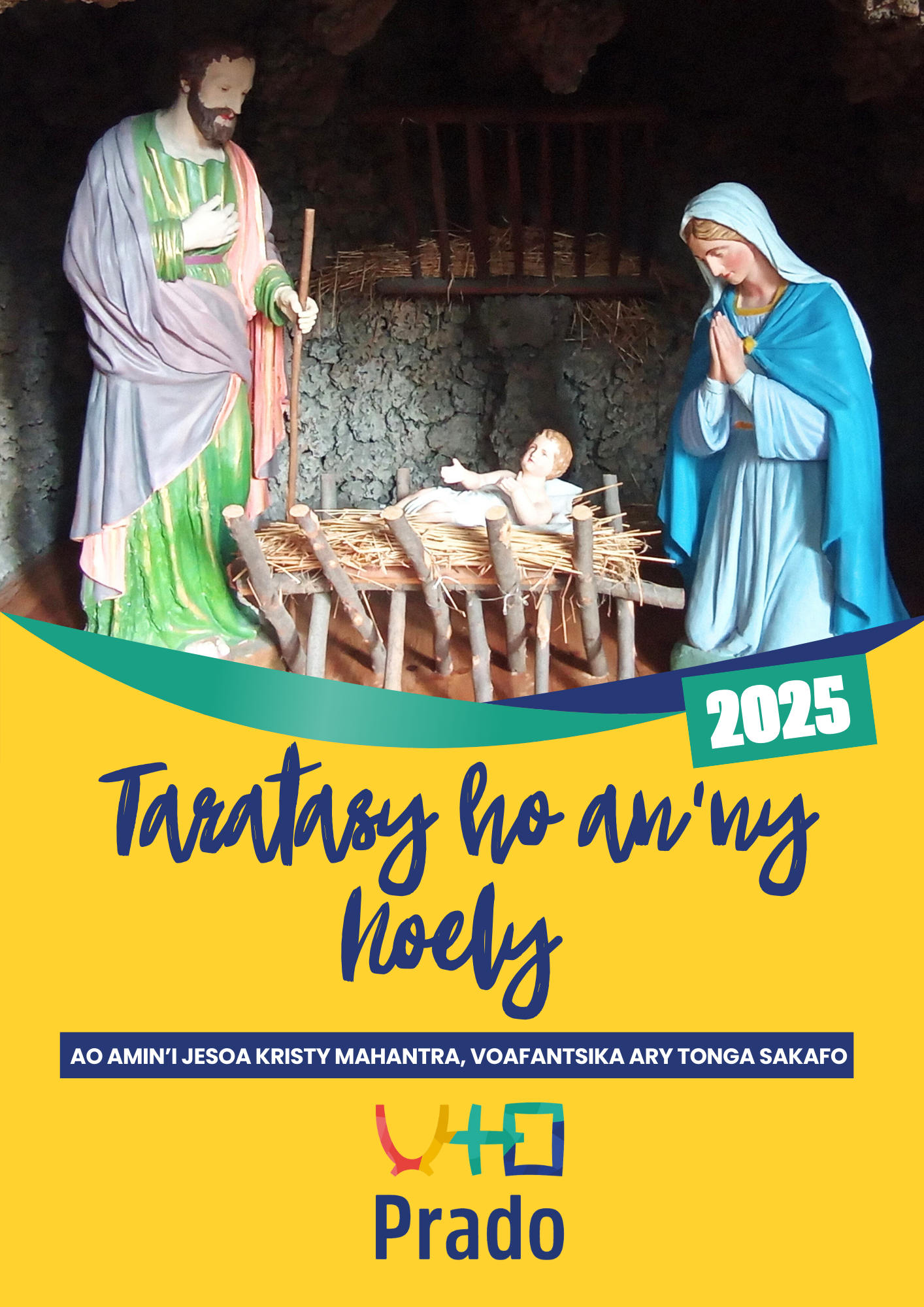
MEETING JESUS IN A COMMUNITY OF THE POOR
«They hurried off and found Mary and Joseph,
»with the newborn baby lying in the manger’ (Luke 2:16)
As we celebrate the mystery of Christmas, I invite you to reflect on this verse from the Gospel, which tells us how a group of shepherds – marginalised people of dubious moral character – encountered a small community of the poor that would change their lives forever. I also invite you to look at our own Prado family across its various institutions, communities and teams. We are called today to be like that community gathered in the stable, with its doors open «to the four winds», to welcome the poor whom God places in our path and to build the Kingdom together with them.
This small community of the poor consists of Jesus, Mary and Joseph, and a small, unspecified group of people who, according to the Gospel account, marvelled at what the shepherds were saying. Luke is a narrator who seeks to engage with the reader, and it is no doubt for this reason that he places these newcomers—of whom we know nothing more than their existence—beside the Holy Family. Each of us can be one of those standing in the stable before Jesus, the Incarnate Word, forming part of this first community. Father Chevrier also longed to take one of those places of honour in the stable. After celebrating the Feast of the Epiphany in the Sistine Chapel, he tells us what his heart truly desired: « I would have preferred to see the manger of the good Jesus and to be a shepherd, so that I might have the joy of being in the stable of the good Saviour » (Letter 15).
This small community of the poor gathers round Jesus. He is the centre and the reason why this stable fellowship has come together. Jesus is a kind of magnet that draws people to one another. The fragility of a small, dependent child – radically and «ontologically» poor, in the words of Fr Ancel – draws the presence of other poor people who discover in him the riches of the Father’s Incarnate Word: his immense and irrevocable love for humanity. « O ineffable mystery! God is with us; God has come to speak to us; he has come to live amongst us to speak to us and teach us » (VD 62). This is the primary task of the team, of the Prado community: to allow Jesus Christ to take centre stage in our lives so that the poor whom the Lord sends us may also discover him in us.
This small community of the poor is enriched by other members who have been chosen and sent by the Father. The shepherds go to the stable because God, through his angel, has revealed to them the event that has taken place. Obeying the Word, they left their flock in the fields and hurried to Bethlehem. They did not take the initiative; they simply listened and obeyed what they were told. In them is fulfilled the Word that Jesus would proclaim in Capernaum: « No one can come to me unless the Father who sent me draws them » (John 6:44). The Father continues to send the poor into the communities of his Church, amongst which is the Prado. He places the poor close to us so that we may show them his Son. Everyone knows who these people living in precarious circumstances are. In the city of Lyon, the presence of migrants who are scraping by with a modicum of dignity in tents is becoming more visible by the day. Less than two hundred metres from the Prado chapel, we have two such camps for the poor. We find them in every village and every town, for the poor will always be among us. This community from Bethlehem encourages the whole of the Prado not to turn our eyes away from the poor and to realise that it is God himself who brings them into our Church.
This small community of the poor lives in poverty of spirit and humility, which leads them to recognise the presence of the Word of God and to worship him in silence. Luke’s account does not record any words spoken by those gathered in the stable. In the presence of the Father’s definitive Word made flesh, any other word is superfluous; it is a distraction. Faced with the mystery unfolding before their eyes, only adoring silence
is possible. Such was the experience that transformed Father Chevrier’s life. Silent contemplation of the One who is the Word made flesh led him to allow the Word to take flesh in his own life and to place himself amongst the poor in order to build, together with them, the new family of Jesus: « A God becomes a child. Out of love, God makes himself accessible to us. He belongs to us. He is given to us. He comes to form a new people of true worshippers, of brothers and sisters » (Christmas Sermon, 1857).
This small community gathers in a stable rather than in the town’s inn. The Father chose this place for the birth of his Son. The Poor One is born in conditions of poverty, and those who are by his side share in those conditions. The place where the community gathers, and the resources at its disposal, can speak of the poverty we are called to live and help us to welcome the poor who
say: « We must embody this spirit of poverty and simplicity and be content with the bare necessities, even in our churches and in our liturgical objects. There must be nothing in our churches or in our adornments that arouses the curiosity or envy of the faithful. […] Put a holy priest in a wooden church, exposed to the elements, and he will attract and convert more people in his wooden church than another priest in a church of gold » (VD 297). Pope Leo XIV emphasises this idea, quoting Saint John Chrysostom, in his recent apostolic exhortation: « God does not need objects made of gold, but souls of gold » (Dilexi Te, 41).
This small, poor community allows itself to be taught by the poor who come to it. The shepherds shiver as they enter the stable and find, in the centre, Jesus, the people gathered in an attitude of worship, and conditions of poverty with which they are all too familiar. They feel at home, and that is why, with complete confidence, it is they who speak up. Their experience confirms what the angel had told them about the child, and they feel the need to share it. It is they who bring the Good News to those who welcome them. Their words inspire admiration in all who listen to them, particularly in Mary, who was able to listen with her heart. How important it is today to listen to the words of the poor with admiration and openness! The poor speak to us of Jesus through their very lives; in them we find the Gospel put into practice. They are for us witnesses and teachers of the faith: « We are witnessing their ability to take on responsibilities in the world and within the Church. Together, we draw hope from the signs of the Holy Spirit that we see in their lives. It is the Gospel that we wish to share with them » (Constitutions 44).
My friends, our Pradosian family is called today to be like that community gathered in the stable. We are about to begin the celebrations marking the bicentenary of Father Chevrier’s birth, and to celebrate it in the same evangelical spirit as the Apostle of La Guillotière, we must renew the charism we have received and open our hearts and the doors of our homes to Jesus, who comes to us in the lives of the poor. May the Lord grant us the grace to be channels of his grace, so that, amongst us, the poor and those who suffer may experience the same human and faith-filled journey that the shepherds experienced in that small and poor community of Bethlehem.
Lyon, 1 December 2025