

Who is Father Antoine Chevrier?
A member of one of the many families who had come to Lyon to work in the silk industry, Antoine CHEVRIER was born in 1826, right in the heart of the city. He was ordained a priest in 1850 and sent as curate to Saint André, a newly established parish in the suburb of La Guillotière on the other side of the Rhône, where a large industrial working class lived. He was delighted with this appointment and devoted himself wholeheartedly to his ministry.
The period he lived through was marked by episodes of insurrection (the Canuts in 1831), the fall of the monarchy (in 1848) and the Lyon Commune (1870–71). It was also a period of reconstruction for the Church in France, which saw the emergence of a wide variety of missionary initiatives: the education of children (the numerous ‘Providences’, the Marists under Mr Champanat), and missions to distant lands (Pauline Jaricot). Antoine CHEVRIER was part of this movement.
In these turbulent times, and in a neighbourhood right at the heart of events, Father CHEVRIER emerges as a man who is not afraid of the people, even when he is angry. He is always deeply moved by their suffering and their «good qualities». He believes in people and in God’s love for them.
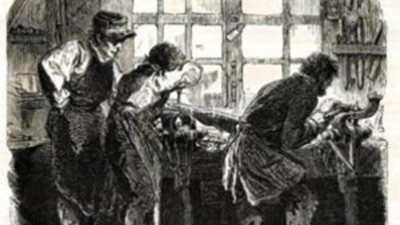
The poor have a right to the Gospel – the whole Gospel
He loves the poor so much, and he loves Christ and his Gospel so much, that he is constantly driven by the conviction that « »The poor have a right to the Gospel – the whole Gospel’ . That is why he spares no effort in contemplating the many treasures contained in the Gospel, in sharing them and making them accessible to the people of the La Guillotière neighbourhood. He believes that young people who started working as early as the age of 8 who work in glassworks, glass-etching workshops and other factories in Lyon, and who, by the age of 12 or 15, cannot read and have never attended catechism classes, are capable of experiencing great joy in coming to know Christ. And he demonstrates this with all those who pass through the Prado at that time. He wants to train poor apostles for the poor, and priests in particular. This is what he will devote himself to in poverty, by enduring much suffering and giving himself entirely, day after day. He draws the necessary inspiration from contemplating Christ, a manifestation of God’s love for humankind. In the midst of his busy life, he will spend a considerable amount of time there. It is it was this spirit that he wished to pass on to the Prado family. And that is why priests, nuns and lay people continue to join the Prado family to this day, in over fifty countries, living amongst the world’s poor in the year 2000 and amidst the turbulent currents that are shaking them.
The Prado: from a ballroom to a pastoral project by the father Gilles VADON, a priest of the Diocese of Lyon – a member of the Prado family.
A spiritual life
Father Antoine Chevrier never ceased to pass on to others his desire to make Jesus Christ known to the poor. Why?
Seized by Christ
On Christmas Eve 1856, Something happened that would leave an indelible mark on his life. He called it his conversion: whilst he was meditating at length on the events at Bethlehem, he felt a powerful calling to « »to follow Christ more closely so as to work more effectively for the salvation of mankind’ as he himself would later tell a few witnesses. It was a light and a call from God that would remain a constant in his life right up to his final moments. As he contemplated the human birth of the Son of God in poverty, he realised that it was not enough simply to love people passionately and seek to alleviate their suffering. If he was to evangelise them, he would have to listen to Christ and do as Christ did: share in the lives of the poor and become poor like them.
Account of his conversion, Christmas 1856
« It was in Saint-André that the Prado was founded. It was whilst meditating on Christmas Eve on the poverty of Our Lord and his humiliation amongst mankind that I resolved to leave everything behind and live as simply as possible » (P 2, p. 7). « »It was the mystery of the Incarnation that converted me« (P 2, p. 97). »It was this mystery that led me to ask God for poverty and humility, and which led me to leave the ministry in order to practise the holy poverty of Our Lord« (Letter, 1865). ‘My life was henceforth set’ » (P 1, p. 47). « I found myself thinking: The Son of God came down to earth to save mankind and convert sinners. And yet what do we see? How many sinners there are in the world! People continue to bring damnation upon themselves. So, I resolved to follow Our Lord Jesus Christ more closely, to make myself better able to work effectively for the salvation of souls, and it is my hope that you, too, will follow Our Lord closely » (P 2, p. 98).
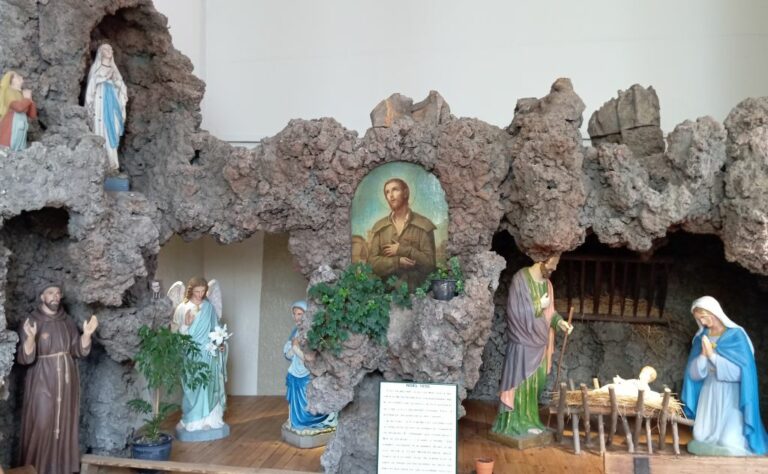
Disciple and apostle of Jesus
«How beautiful Jesus Christ is!»
Throughout his very busy life, he found a way to devote a great deal of time to studying the Gospel, so that he might contemplate Jesus Christ, seek to understand his spirit, and follow him closely as a true disciple. He was particularly keen to understand and imitate his poverty and his love for the poor.
Father Chevrier’s original teaching method was based on a love for Jesus Christ, his beauty and his greatness. Since « Knowing Jesus Christ is everything », he had no hesitation in setting out, drawing on the Gospels and St Paul, the reasons why the disciple should prefer him to the «rest».
Then he would ask: « That’s all well and good, but does everyone understand it? »
Answer: « It takes a special kind of grace to understand him »
New question: « Can you feel this grace welling up within you? »
And he concluded: « If we feel this divine breath within us, if we glimpse a small light, if we feel even the slightest attraction towards Jesus Christ, ah! let us nurture this attraction, let us help it to grow through prayer, meditation and study, »so that it may grow and bear fruit.’
The training of disciples
He then tirelessly sought to discover the very way in which Our Lord had «taken charge of the inner formation of his apostles»: «He instructed them ceaselessly, correcting them at every turn, putting them to the test in everything, and training them in everything. » It was, therefore, in the first apostolic college, then in its infancy, that Chevrier sought his famous «method for forming people and giving them an inner life”: Teach, revise and put into action, get things done, », that is life, its lifeblood and the way to convey it…".
Attend catechism classes
He systematised this «method» in one of his famous trilogies, thereby establishing the « the aim of all education and of the catechism »: «It is to shed light on intelligence through knowledge, to reach the heart through love and to determine the will to take action. Faith, love and action, »these are the three effects that one must seek to achieve in all teaching.’ (Father Chevrier VD, 118–119; 222, 451).
It is clear that his teaching method draws its inspiration from the study of Jesus Christ in the Gospel. In his desire to introduce Jesus Christ to the very young, Father Chevrier encouraged the young men and women who joined him to «follow his catechism»: studying the Gospel enables one to get to know Jesus Christ better – his thoughts and his actions – so that these can be incorporated into the catechist’s own life and conveyed through both words and behaviour.
Poor priests for the poor
He sought to bring together priests who were willing to live in poverty amongst these poor people, in order to share the Gospel with them in accessible language and through genuine behaviour. But he encountered many difficulties: some priests were unable to obtain permission to come, whilst others failed to adapt. So he decided to to train young people himself for the priesthood.
In 1865 He began to gather a few young people at the Prado to provide them with an academic and apostolic education amongst the children of the Prado. If they wished to continue, he would send them to the diocesan seminary, where he would continue to look after them, writing to them often and visiting them. He invited them to spend their holidays in the Prado, so that they would not develop the habits of «bourgeois priests». He wanted to immerse them once more in working-class life and enable them to deepen their discovery of Christ and the Gospel through their daily lives.
«We must form a true spiritual family amongst ourselves», find out more.
He also involves young female factory workers and domestic workers in this work. To those who are well suited to this mission, he provides training based on the Gospel and offers them a life dedicated to Christ and to the poor. One of them, Marie Boisson thus became the First Sister of the Prado. Among the young men who would go on to work alongside him, some would remain laypeople, whilst others would join the community of the Sisters of Prado; and of the four seminarians whom Father Chevrier had trained, two would remain with him at the time of his death. Despite the difficulties, he stated:
« And the bonds of this spiritual family are closer and stronger than those found in earthly families… When two souls, enlightened by the Holy Spirit, listen to the Word of God and understand it, a very intimate union of spirit is formed between them, of which God is the source and the centre. This is the true bond of religion, the true bond of the soul and the heart » (VD 151).
The Painting of Saint Fons
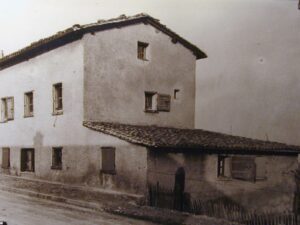
To do this, he likes to retreat to the tranquillity of a humble little house in Saint-Fons, a few kilometres south of Lyon, to «fill the lamp with oil», as he puts it!
Father Chevrier wrote a great deal. Around 20,000 pages … Here: the most original of all Father Chevrier’s manuscripts. It is a full-scale manuscript – quite a unique piece!
In this little farmhouse, which the mayor of St Fons (Mr Motard) had made available to him, Father Chevrier would regularly go there himself to «refill his lamp».
Then he began to «paint» these walls in August 1866, in the presence of 12 young men who were considering becoming priests and whom he had taken there to lead them on a retreat: one might say that it is the founding ecclesiastical document of the Prado Priests’ Association and the training of «priests according to the Gospel» initiated by Antoine Chevrier.
In the end, it’s « the »summary’ of his entire spiritual life (he gets straight to the point, and above all to the existential consequences of his spirituality: Father Chevrier is a practical spiritual leader!)
A text by Philippe Brunel.
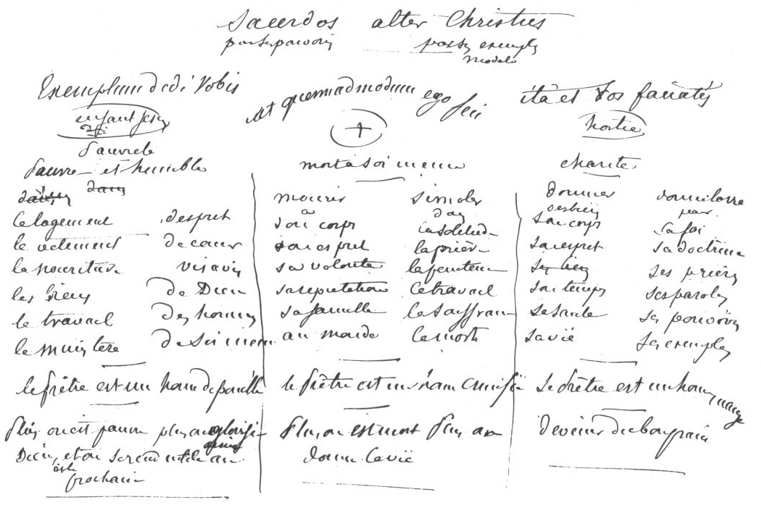
In fact, Father Chevrier very often speaks of « »these three stations’ in his writings or letters, including those to lay people. (See Sister Marylène’s work, which identifies this triptych in the Letters and Writings of Antoine Chevrier). Indeed, he had already set out, in writing, virtually the same three-part framework for the young men and women who were considering devoting their entire lives to becoming brothers or sisters, following in the footsteps of Father Chevrier.
In several of his writings, Antoine Chevrier tells everyone that these three stations must, in a sense, become like the three «stigmata» that should mark their entire lives, so that they may «follow Jesus Christ more closely». This is not entirely original: this triptych of the nativity scene, the cross and the tabernacle is quite traditional within the Church.
However, the painting of St Fons depicts a special kind of richness. Indeed, in his writings, Father Chevrier refers to these three stations in what is often a linear order: the manger – the cross – the tabernacle (or charity).
This is by no means insignificant: Father Chevrier then emphasises the aim, the ultimate purpose, which is Eucharistic charity. He refers to the «highest degree» in relation to the tabernacle, charity and the Host: « to turn into good bread ». Thus, the other two stations – the manger (= poverty) and the cross (= dying to oneself) – are, in a sense, the paths that Jesus Christ took and which he wishes to set as an example for us, so that we ourselves may attain a «Eucharistic life» of total self-giving.
Yet the whole point of the St Fons painting is that it presents itself as a «3D triptych», which makes it much more dynamic and vivid … For in fact, we are, in a sense, «physically integrated» into the painting of St Fons. It is a bit like a stage, onto which we are invited to step ourselves. We are no longer on the outside, as if looking at a piece of paper or listening to a theoretical lecture presenting the three stations in sequence: the Nativity – the Cross – the Tabernacle.
Here, the «tableau» of St Fons is therefore not merely a tableau; it is truly «a space», in three dimensions. Within this space, Father Chevrier has physically arranged three symbols:
- one feeding trough in which he laid a beautiful Baby Jesus on some straw;
- a beautiful crucifix which he hung in the centre of the other wall, directly opposite the nativity scene.
- in the centre, the narrow gate an open doorway, directly in front of us, leading into the small chapel where the tabernacle is kept.
This space is, ultimately, the depth and breadth of the life of a true disciple, of the Christian life, of the life of a priest according to the Gospel. For here, we are personally and physically placed right in the midst of, and within, a composition of these three panels which communicate and engage in dialogue with one another. And that changes everything!
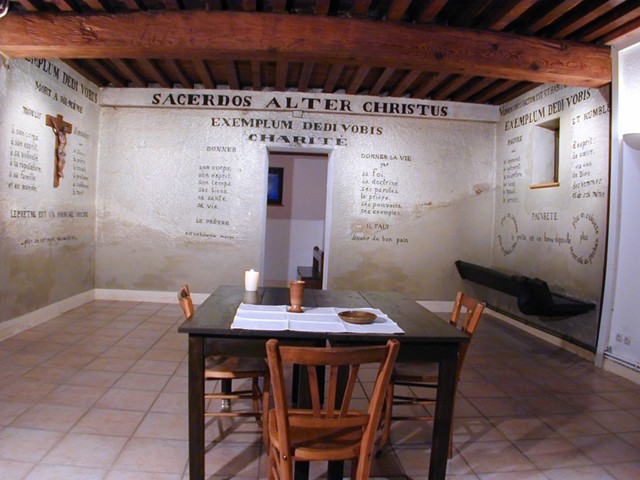
Ideally, I would say that the painting of St Fons is not meant simply to be looked at and «analysed»; it is meant to be «passed through», that is to say, related to our own existence, «experienced». Even though one can spend long moments in meditation before this triptych, it is not a matter of simply sitting in front of the painting. It is a matter of inhabiting it, of passing through it, moving between the nativity scene and the cross, until one passes through the narrow gate of charity. The aim is clearly to reach the tabernacle of Christ’s total love, which continues to give itself, together with us, to humanity.
We are therefore physically and spiritually situated at the centre of the three stations. And in my view, what gives movement to the whole is precisely what first imposes itself upon us, what stands before us; it is the narrow gate of charity! In reality, it is this gate which, in a certain sense, calls us to pass through it; it is this that sets us in motion, since the tabernacle is not visible, being situated in a room at the back (somewhat like Eastern sanctuaries, which are located behind the iconostasis): to reach it, one must make one’s way between the nativity scene and the cross…
In my view, to grasp the deeper meaning of this triptych by Prados, We must therefore begin by considering the central panel of the charity, that is to say, through the word «give». Indeed, if we look closely at the painting as a whole, we see that it is entirely organised around this verb «DONNER»: we find it written by Antoine Chevrier on five occasions (including three times in the central panel).
Furthermore, the quote « AN EXAMPLE FOR YOU »appears on all three sides of the painting: « This is an example that I have given you given » !
«Having the Spirit of God is everything!»
« The Spirit of God is unique: He is the same everywhere; on earth He is what He is within the Holy Trinity: He works in the same way, and His action is always to unite souls to God, just as within the Trinity He unites the three divine Persons to form one God.
The Holy Spirit is upon the earth: He works within souls and draws them to God. He enlivens them, sanctifies them, uplifts them and instils in them all the same aspirations of love, faith and charity, to the extent that they are capable of them, so as to unite them intimately with God, through Him and the Divine Son. » (1)
(1) Antoine Chevrier, Manuscript «Preparation for the Incarnation», 1871 or 1872 – Full text in Y. Musset, *Le Christ du Père Chevrier*, Paris, Desclée, 2000, pp. 54–57
See also
Works:
- The Priest According to the Gospel, or the True Disciple of Our Lord Jesus Christ, Prado Editions Librairie, Lyon, 1968, 558 pp.
- Letters, Prado, 1987, 463 pp.
Sources:
- Manuscripts by Father Chevrier held at the Prado Spiritual Centre, 2054 Chemin de Saint-André, 69760 Limonest;
- Statements taken between 1897 and 1901 during the beatification process and preserved in Limonest;
- J.M. Villefranche, *The Life of Father Chevrier, Founder of the Providence du Prado in Lyon*, Vitte, Lyon, 1894, 380 pp.;
- Claude Chambost, *A New Life of the Venerable Father Chevrier, Founder of the Providence du Prado*, Vitte, Lyon, 1920, 620 pp.;
- Henriette Waltz, *A Poor Man Among Us*, Cerf, Paris, 1947, 324 pp. (new edition published by Cerf in 1986);
- Jean-François Six, *A Priest: Antoine Chevrier, Founder of the Prado*, Seuil, Paris, 1965, 537 pp.; A
- Antoine Chevrier, *Selected Spiritual Writings*, edited and introduced by Yves Musset, Cerf, Paris, 1986, 118 pp.;
- Yves Musset, *History of the Family of Antoine Chevrier, Founder of the Prado*, Prado, 1989, 219 pp.;
- Yves Musset, *The Genesis of the True Disciple of Father Chevrier*, Prado, 1997, 3 volumes (260, 342 and 342 pp.).
The beatification of Father Chevrier in 1986
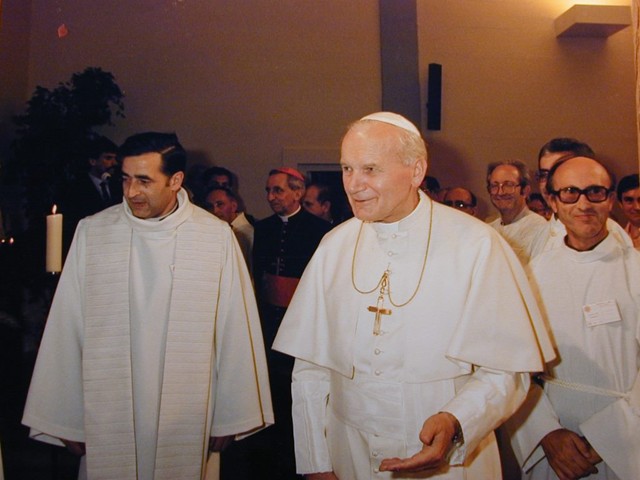
To all of you – priests, brothers, sisters and lay people of the Prado – and to all those to whom you are sent.
To all those who now live in the Guillotière neighbourhood, I bestow my affectionate Apostolic Blessing. A novena has been written, drawing on the teachings of Father Chevrier, who was beatified in 1986 by Pope John Paul II. Read the Novena of Antoine Chevrier
A newsletter A quarterly magazine is published to campaign for the canonisation of Blessed Antoine Chevrier. Please do read and share these articles from Prado:
- July–September 2018 – Newsletter No. 1.
- October–December 2018, Newsletter No. 2.
- January–March 2019, Newsletter No. 3.
- April–June 2019, Newsletter No. 4.
October–December 2019, Newsletter No. 5.
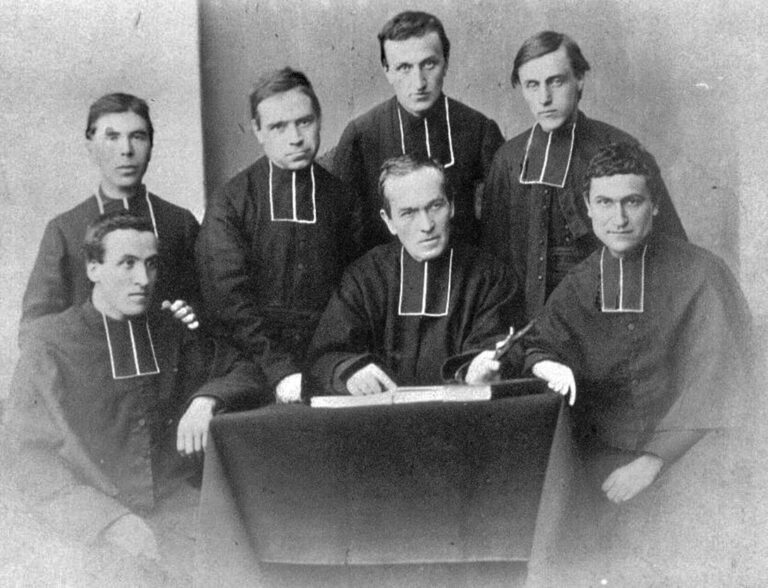
Blessed Antoine Chevrier, a priest in the spirit of the Gospel
«How beautiful Jesus Christ is!»
Father Chevrier expresses his profound admiration and joy in the One he contemplates and, in leading others to contemplate Him, notes Cardinal Garonne in a preface reprinted for the new edition of the Prado’s founder’s book: *The Priest According to the Gospel, or the True Disciple of Our Lord Jesus Christ*.
«How beautiful is this man of God,» said Blessed Antoine Chevrier once more, speaking of the priest «in the image of Jesus Christ». From Rome, where he was putting the finishing touches to the preparation of his first four deacons for ordination, he sent them this note: «How great you will be when you become priests, yet at the same time you must be humble in order to truly be new Jesus Christs on earth… How beautiful, yet how difficult. Only the Holy Spirit can help us understand this.».
«To evangelise the poor was the great mission of Jesus Christ on earth.» For Father Chevrier, therefore, this is the mission of the «new apostles in the world» whom he so dearly wishes to give to the Church. To begin with the poor—the first recipients of the Good News—is to ensure that no one is forgotten.
Preparations
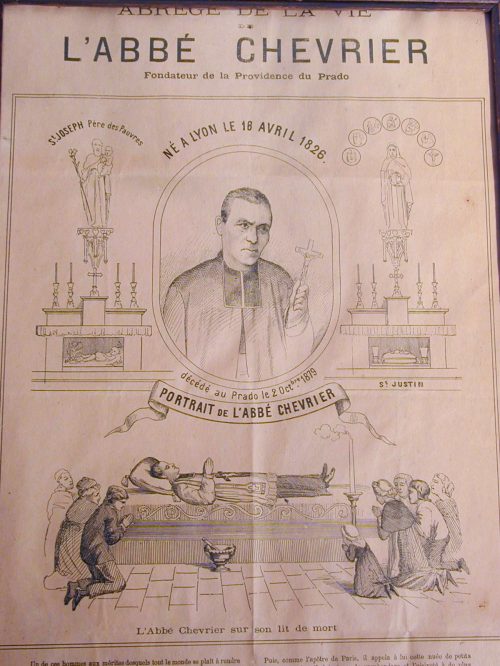
Father Chevrier’s life bears the mark of the world in which he was raised. Antoine was born on 16 April 1826 into a modest family in the heart of the city of Lyon. His father worked at the city tax office. His mother was a silk craftswoman. Originally from the Dauphiné region, she always displayed an energetic temperament. She found it hard to let her son leave for the seminary, hoping for a better future for him. It was a curate in his parish who suggested to Antoine Chevrier that he become a priest, a suggestion he readily accepted. After attending the parish seminary, he entered the Saint Irénée Major Seminary in Lyon in 1846. He was 20 years old. He was ordained a priest on 25 May 1850. He was too young to have any vivid memories of the two Canut revolts of 1831 and 1834. However, he did witness the events of the 1848 revolution. A group known as «Les Voraces» even occupied the major seminary.
At the end of the seminar, his personal notes reveal his desire to become a good priest «who knows how to devote everything to the Gospel». ‘For,’ he continues, ‘there is good to be done wherever I may be, and however bad or wicked the people I have to guide may be, they are all called to salvation.’.
Beginnings
Having been ordained three days earlier, Father Chevrier crossed the Rhône to join the recently founded parish of Saint-André de la Guillotière. The population was growing very rapidly, with people flocking in from the countryside and the surrounding provinces and crowding into
brick houses nestled amongst the factories and workshops. The metal, textile and chemical industries were booming. The first railway lines ran from Lyon. A village in the Dauphiné region with a population of 7,000 in 1815, this suburb of La Guillotière would have a population of over 40,000 by the time it was incorporated into the city of Lyon in 1852. By 1856, that number had doubled again. The young curate found himself at the heart of industrial expansion and its many problems. He devoted himself wholeheartedly to his ministry, to the point of falling ill. He witnessed the material and moral destitution of the workers and suffered greatly from the gulf that separated him from the people. In December 1855, he was forced to take four months’ rest before returning to Saint-André.
A decisive year
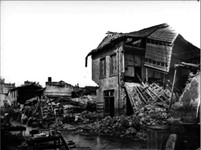
On 31 May 1856, the neighbourhood was flooded by the overflowing waters of the Rhône. The parish clergy were at the forefront of the rescue efforts. Father Chevrier played a very active part in the relief work. His reputation for dedication grew. He gained an even greater appreciation of the extent of the hardship afflicting the people. These events brought him face to face with the lives of local families, with their substandard housing and endless working days, including Sundays. Whilst faith in God shaped their outlook, it was above all their religious «ignorance» that scandalised him, even more so than the frequent hostility towards priests and the Church. To them, priests were from another world. He was distressed to see his ministry bear so little fruit. Yet he is very busy. His parish priest allows him to celebrate most of the baptisms, weddings and funerals. On the other hand, he opposes the meetings of a group of young people whom Father Chevrier has brought together to train them as «apostles».
In June of that same year – probably 1856 – he met Camille Rambaud. This young man from the Lyon bourgeoisie had dedicated himself to serving the poor, living like them and amongst them. He built «la Cité de l’Enfant Jésus», a sort of emergency shelter. Antoine Chevrier was deeply moved by his visit and, on his return to the presbytery, said: «I have seen John the Baptist in the desert!»
On Christmas Eve 1856, he meditated before the nativity scene. «The Word became flesh and dwelt amongst us.» Something was born on 25 December of that year: an entirely inner event which he called his conversion.
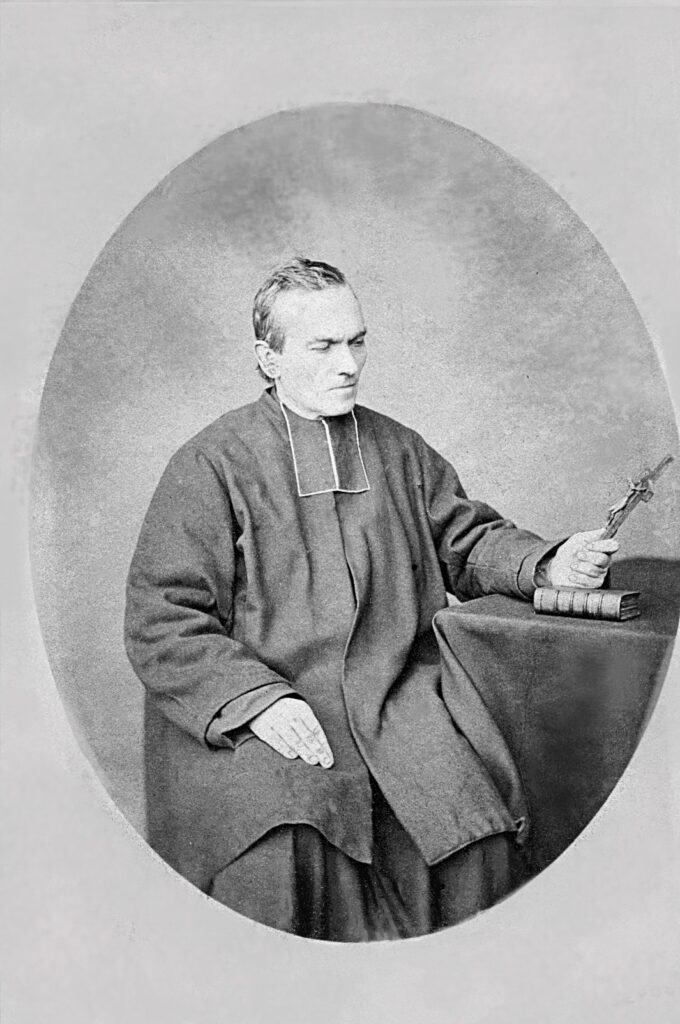
He has been a priest for six years, serving in an ordinary parish ministry, and is much loved by the faithful. Yet, according to those to whom he confided directly, he is reported to have said: «It was the mystery of the Incarnation that converted me… I used to think to myself: the Son of God came down to earth to save mankind and convert sinners. And yet what do we see? How many sinners there are in the world! People continue to bring damnation upon themselves. So I resolved to follow Our Lord Jesus Christ more closely, to make myself better able to work effectively for the salvation of souls.» He then continued, speaking with the insight of a founder: «And my desire is that you, too, should follow Our Lord closely.».
So something began at Christmas 1856. Antoine Chevrier conceived the plan to live as a priest according to the Gospel in order to meet the immense apostolic needs he saw around him. «It was at Saint-André that the Prado was born,» he would say.
The manifestation of charisma
In fact, Antoine Chevrier went through a further four years of trial and error. Determined yet cautious, he sought advice from various people. As early as 1857, he went to consult the parish priest of Ars. The two men held each other in high regard. Father Chevrier recognised in Jean-Marie Vianney an elder brother who, in his own way, was accomplishing what Chevrier himself felt called to do. He would go about it differently, however, as they were not of the same generation. And the situation of a curate in a working-class suburb, at the heart of the emerging industrial and technological world, was not that of a village parish priest. In August, he left his parish ministry to become chaplain of the «Maison de l’Enfant Jésus», founded by Camille Rambaud for terminally ill children, as well as of the «Cité» of the same name, a social housing project for workers. He taught catechism to the children with the help of a few lay people, including Marie Boisson, a young silk worker who would go on to become the first superior of the Sisters of the Prado. Father Chevrier and his companions soon realised that the situation was unsustainable, as Camille Rambaud’s project and their own were too different.
His priority is «a wholly spiritual ministry». His three young companions are determined, like him, to devote themselves primarily to teaching the catechism to poor children: Marie is 22 years old; Pierre Louat, a notary’s clerk, is 27, and Amélie Visignat, aged 22, has joined the Cité to teach catechism to girls. To Father Chevrier’s surprise, Marie did not hesitate, in order to ensure the success of this project, to consult Cardinal de Bonald, who received her very warmly and encouraged her simple and resolute approach.
Towards the end of that same year, 1857, the man who came to be known as Father Chevrier undertook a retreat, at the end of which he made a resolution that expressed the meaning of his priesthood: «To study Jesus in his earthly life and in his Eucharistic life will be the focus of all my study. To imitate Jesus—that, then, is my sole aim, the purpose of all my thoughts and actions, the object of all my hopes and desires. Without this, I shall never be a good priest nor shall I ever work effectively for the salvation of souls. To study Jesus—that is the whole of my study.» He left behind more than 20,000 handwritten pages of his «Study of Our Lord Jesus Christ», diligently crafted in prayer and with the threefold aim of advancing himself in a life as a true disciple, of providing solid and simple nourishment for «teaching the catechism», and of training apostles for the evangelical service of the poor.
The First Communion ceremony
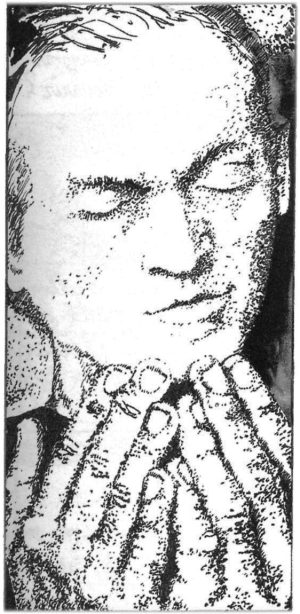
At the end of 1859, Father Chevrier left the Cité Rambaud. In the Guillotière neighbourhood, he would sometimes pass by a disreputable dance hall called the Prado. Each time, he would ask God to grant it to him. One day in 1860, the hall was advertised as «for rent or for sale». With the help of two fellow priests, Father Chevrier paid the rent; a Protestant contractor offered to send workers to fit out the premises. The hall was immense: a thousand people could dance there comfortably. Father Chevrier first had the chapel built in the centre; on either side, accommodation was set up for poor and uneducated teenagers, whom he would take in for six-month periods in order to instil in them «a sense of their own dignity», to prepare them for their First Communion and to provide them with a basic education. Father Chevrier took possession of the premises on 10 December 1860. The Prado was founded. Sister Marie took charge of the girls. Around Easter 1861, the Prado was home to ten girls and fifteen boys. A few years later, the house would have to feed more than two hundred people. Father Chevrier would even go so far as to beg on days when bread ran short; he never wanted any work to be brought onto the premises for the children, as was the custom at the time. The little time they spent at Le Prado was too precious in his eyes for them to be deprived of discovering «their duties as men and as Christians».
«The needs of the times and of the Church»
In 1865, Father Chevrier began to realise «a project he had longed to carry out for many years»: a school for the training of priests. For him, bringing the seminarians into contact with the children of the Prado was the best way to train priests of humble means to evangelise the poor. Over the course of the year, an exchange of letters with Father Gourdon led him to believe that the latter might join him. In late January 1866, Father Chevrier realised that the archbishop’s office would not grant the requested authorisation. In May, he bought a house and a plot of land situated across the road, opposite the Prado. The sisters moved in there with the girls who had just received their First Communion. The Prado was then able to accommodate the seminarians. Father Chevrier devoted a great deal of time to their formation. He wrote a book for them, which he left unfinished: *The Priest According to the Gospel, or the True Disciple of Our Lord Jesus Christ*. In this, he remained faithful to the grace he received at Christmas 1856, «when he received quite special insights into the poverty of Our Lord and into his special vocation to train poor priests». He carried out this formation whilst continuing the work of First Communion and, from 1867 to 1871, taking charge of the parish of Moulin à Vent, thus fulfilling his commitment to «the work of poor parishes». With the approval of his Archbishop, he also spent several months in Rome to complete the training of the first deacons.
In 1878, Father Chevrier faced the ordeal of seeing the work he held most dear fall apart. The first four priests he had trained wanted to leave: one to La Trappe, another to La Grande Chartreuse, and yet another to serve as a missionary in China… He then wrote a heartfelt letter to Father Jaricot: «I would feel a certain sorrow at seeing the Prado deserted and without children, when, for eighteen years, it has been the scene of so much toil, labour and conversions… I shall take comfort in having formed Trappists, Carthusians and missionaries, even if I have not succeeded in forming catechists; although, it seems to me, this must be the need of the times and of the Church today».”.
The letter is signed: «Your brother in Jesus Christ, forsaken on the cross». A few months later, he fell seriously ill and had to cease all his activities. Treated in Limonest, he was transferred, at his own request, on 29 September to Le Prado, where he died on 2 October 1879.
«Sacerdos Alter Christus»
This theme recurs frequently in Father Chevrier’s writings. For example, in a letter addressed to Abbé Gourdon: «The priest is another Jesus Christ – that is all very well. Pray that I may truly become one. I feel that I am so far removed from this fine model that I sometimes lose heart – so far removed from his poverty, so far removed from his death, so far removed from his charity. Pray, and let us pray together, that we may become like our fine model.» We find this again in one of his later writings: «Our particular motto is «Sacerdos Alter Christus». To imitate Jesus Christ, to conform ourselves to him, to follow him as closely as possible: this is our desire and the great aim of our lives.» He found the phrase in the writings of the Church Fathers, he said. It is more likely that it was to be found in the literature of the time. That is not the point. Father Chevrier quite simply believed that priestly ordination had bestowed upon him a free gift from God, a grace to be brought to fruition. To do this, he must «know, love and follow Jesus Christ». To know him by studying the Gospel, for it was written so that we might today walk the path that the apostles walked with him. Knowing him leads us to love him more and invites us to model our lives on his, and thus to follow him in the mission he received from his Father. For him, this formula is not an abstract theological definition but a guiding principle for his life, a journey to be realised day by day.
«Knowing Jesus Christ is everything. The rest is nothing. Whoever has found Jesus Christ has found the greatest treasure. They have found wisdom, light, life, peace, joy, happiness on earth and in heaven, and the solid foundation upon which they can build.» Building on this unique knowledge, Antoine Chevrier, as a true teacher of the faith, pioneered a spiritual and pastoral approach that puts «the inner life first»: «It is the Holy Spirit who brings Jesus Christ to life within us». «Are we not here for this, and for this alone: to know Jesus and his Father, and to make them known to others? I work at this with joy and happiness. Knowing how to speak of God and making him known to the poor and the uneducated—this is our life and our love.».
On the walls of a former stable, where a feeding trough for the animals still stands today, Father Chevrier had the idea of painting, together with twelve young men who were considering becoming priests, a picture which the people of Saint-Fons have come to call the «Saint-Fons Painting»: the Nativity, Calvary and the Tabernacle. The layout of the space led him to place the mystery of the Eucharist at the centre of the triptych. The idea of summarising the Gospel ideal in this way was not his own invention. But his commentary on it is uniquely his own, particularly the threefold affirmation: «the priest is a man stripped bare, the priest is a man crucified, the priest is a man consumed». The last phrase has become widely known. But one can only grasp its full meaning if one carefully reads and lives out what Father Chevrier himself lived. Just as his Master and Lord did. Without poverty and suffering, a relentless workload will never ‘become good bread’.
For no other reason than his love for the people whom God loves, and driven by a passion to «give them the faith» he himself had received, Father Chevrier, himself deeply influenced by the holiness of Francis of Assisi, remained faithful to the resolve he had made after Christmas Eve 1856: «To be with the poor, to live with them, to die with them». He died at the age of fifty-three. The residents of La Guillotière asked the prefecture for him to be buried in the Prado Chapel. «Three hundred priests took part in the funeral, and the number of people who followed the funeral procession was estimated at ten thousand. It was also said that fifty thousand people had lined the route of the procession.».
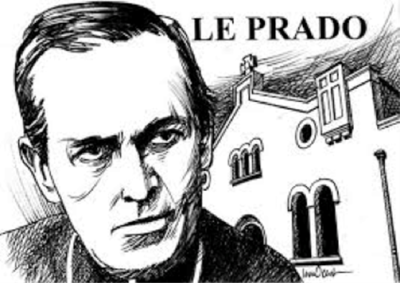
The Prado: from Chevrier to the present day
The Association of Diocesan Priests of the Prado, which for a long time was based in Lyon, expanded after the Second World War into numerous dioceses in France, Spain, Italy and the Middle East, driven in particular by Bishop Ancel. Today, it is present in more than fifty countries. The family has expanded to include Sisters and consecrated laypeople, both women and men. Deacons and an increasing number of lay faithful around the world are also drawing strength from this message. Father Chevrier was beatified by Pope John Paul II in Lyon on 4 October 1986. He made a pilgrimage to his tomb on 7 October.
The Chapel, with its humble simplicity, welcomes numerous pilgrims from France, Italy, Spain and various other countries.
Roland Letournel
Robert Daviaud
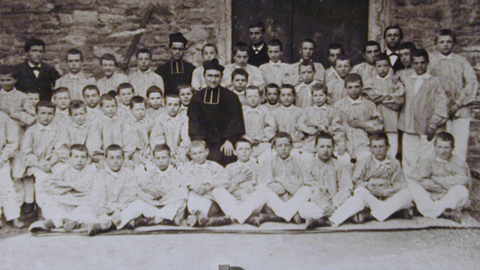
The story of Father Antoine Chevrier in a few key dates
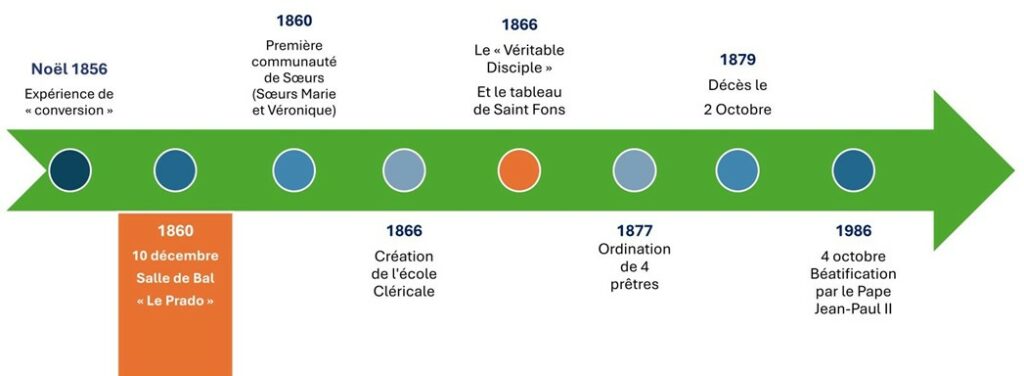
Diagram taken and translated from a presentation by Father Luc LALIRE (1st Assistant to the General Prado) for the laity of Peru (January 2025).