



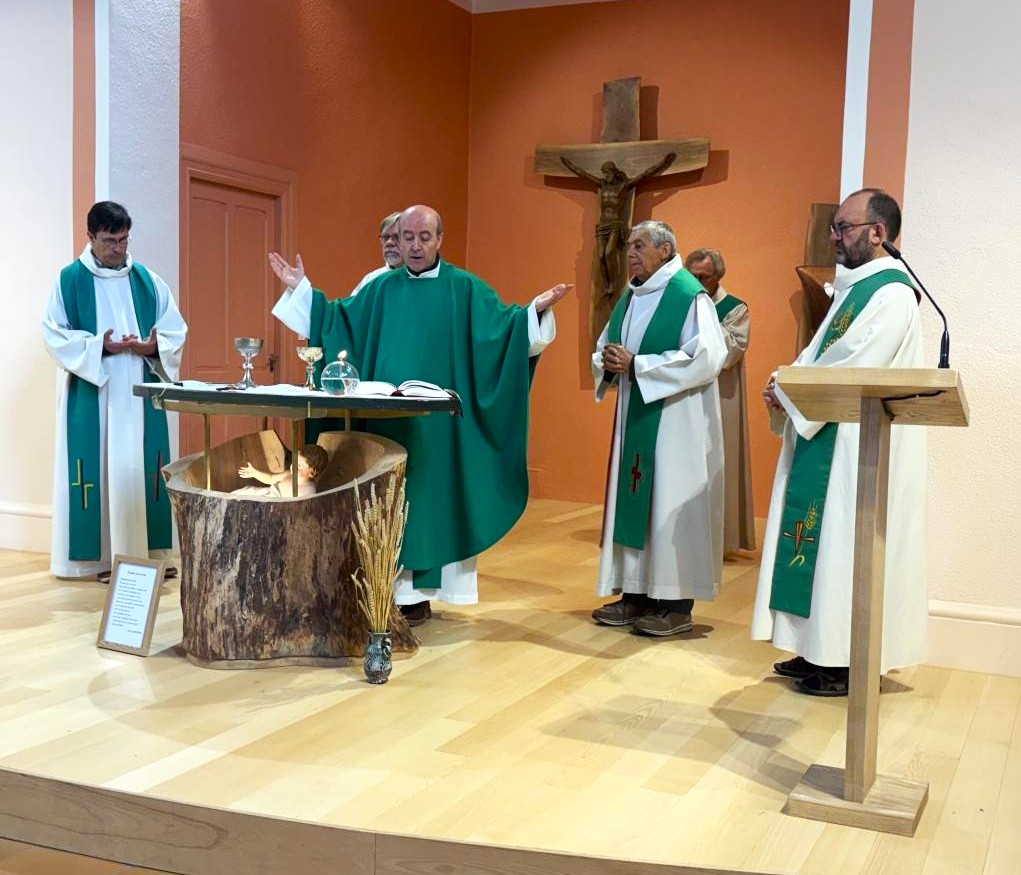
From 25 January to 4 February 2026, the Assembly of Priests of the Prado in France was held in Limonest. During Mass on Sunday 1 February, in the chapel of the Prado Saint-André Guest House, Father Diego MARTÍN PEÑAS delivered the homily, guiding the congregation with his spiritual reflection.
Jesus, our only Teacher, the only one we wish to listen to, is sitting beside us this morning on the mountain of our congregation, of our lives. With his usual patience – for he knows our clumsiness well – he reveals to us the Good News of his Father.
- Grateful for the gift of poverty
Poverty is a gift that the Father has given to Jesus, and in which Jesus allows us to share. It is God who desires our poverty: «I will leave a poor and humble people in your midst». In Europe, the Church and the Prado family are this poor and small people, but instead of seeing this path of humility as a grace, we resist it. We find it difficult to be the sort of Church that Paul proposes to us in Corinth, one whose poverty stands in contrast to the values of our world.
Poverty is the condition that enables us to live in trust in the Lord and to be of greater service to our brothers and sisters: «They (the poor) shall take refuge in the name of the Lord.» Poverty is a gift, a grace for which we must live in gratitude. A clear sign of God’s presence in our world. The Prado movement has grown considerably in Brazil because a priest from that country—now a bishop emeritus—heard a member of the Prado say, «Poverty is a grace», and also saw poverty in his own life.
- Poverty is the beginning of the other beatitudes
The Gospel reading we have just heard is a true portrayal of Jesus.
We appreciate his way of life, which begins with poverty of heart. For, as Father Chevrier reminds us, poverty – the manger – is the beginning of God’s work. Poverty is the condition that leads us to live out the other dimensions of the Gospel.
As Father Ancel reminds us, Jesus is «ontologically» poor. He is poor to the very core of his being, in every thought and action, at every moment of his life. And because he is poor in this way, he is for us the model of the new humanity, of the humanity desired by the Father: because he is poor, Jesus sympathises with the suffering of others and is capable of weeping; because he is poor, Jesus rejects violence and becomes a peacemaker; because he is poor, Jesus has compassion for the miseries and sins of his brothers and sisters, however great they may be; because he is poor, Jesus fights against the injustices suffered by the needy; because he is poor, he is led to the cross, where he gives his life for his brothers and sisters.
Poverty is the starting point from which we, too, can embody the new humanity of Jesus, as described in *Gaudium et Spes*.
- Poverty is a path to happiness
Evangelical poverty, as we know, consists in renouncing earthly possessions because we have found the supreme good in the Kingdom of the Father. Jesus regards the Father as the most important thing in his life and, for this reason, is able to go without even food. He went forty days without eating because, as he told his disciples, he had a food they did not know about: doing his Father’s will. However, in our world, poverty is regarded as a misfortune because of the tyranny of money that looms over us.
But in our lives, we gradually come to experience the happiness that poverty brings.
Moreover, it is Jesus himself who teaches us, through his life and his words, that the path to heaven begins with poverty. And we must listen to him, for, as Father Chevrier tells us: «The Master has said it, and that is enough for us» (VD 99). The disciple does not argue or doubt the Master’s word, but accepts it with obedience and love. Today, Jesus tells us that the poor in spirit are blessed. But there is another passage in the Gospel of John which emphasises this idea. At the end of the Last Supper, after presenting himself as a servant who washes the disciples« feet and inviting us to do the same, Jesus tells us: »Blessed are you if you know this and put it into practice.’.
If we embrace poverty and devote ourselves to service, we will set out on the path to true joy.
Today is a day to reflect on how we receive the gift of poverty. To identify our resistance and try to overcome it. To thank God for the little we understand and experience. May Mary of Nazareth, the image of the poor and humble people whom God loves, intercede with her Son so that he may bestow upon us the gift of beautiful poverty.
Diego Martín Peñas
General Superior of the priests and brothers of El Prado