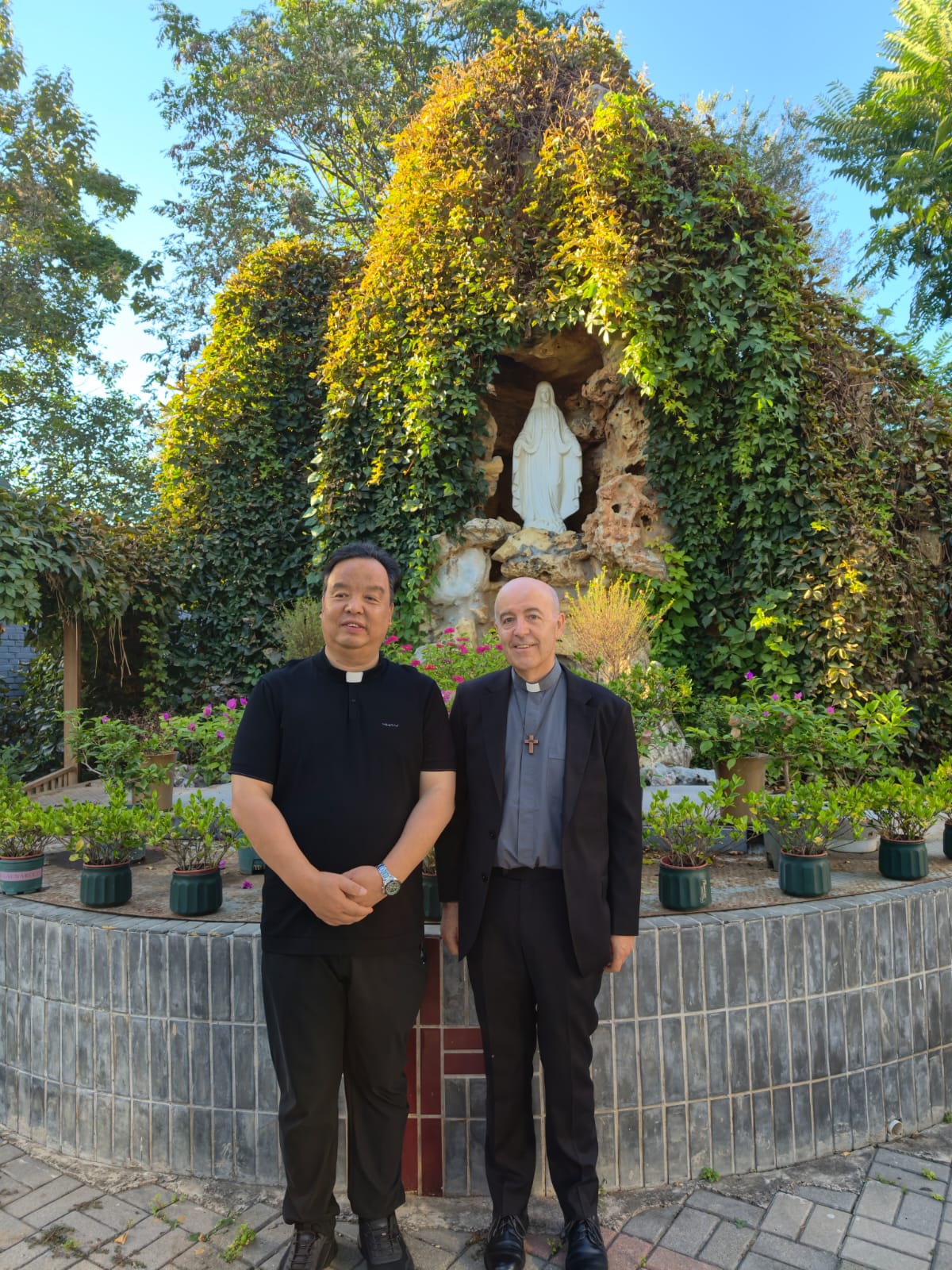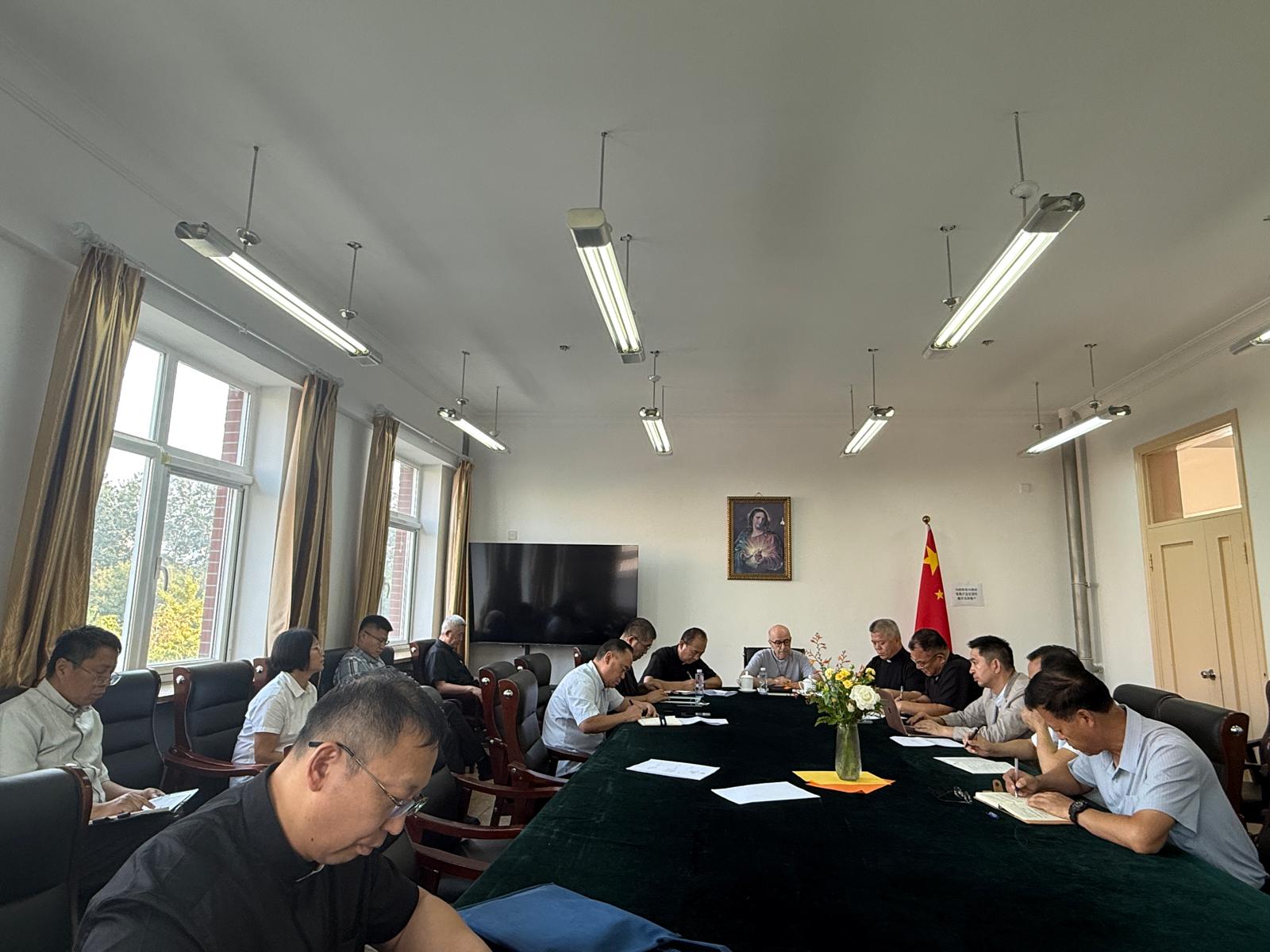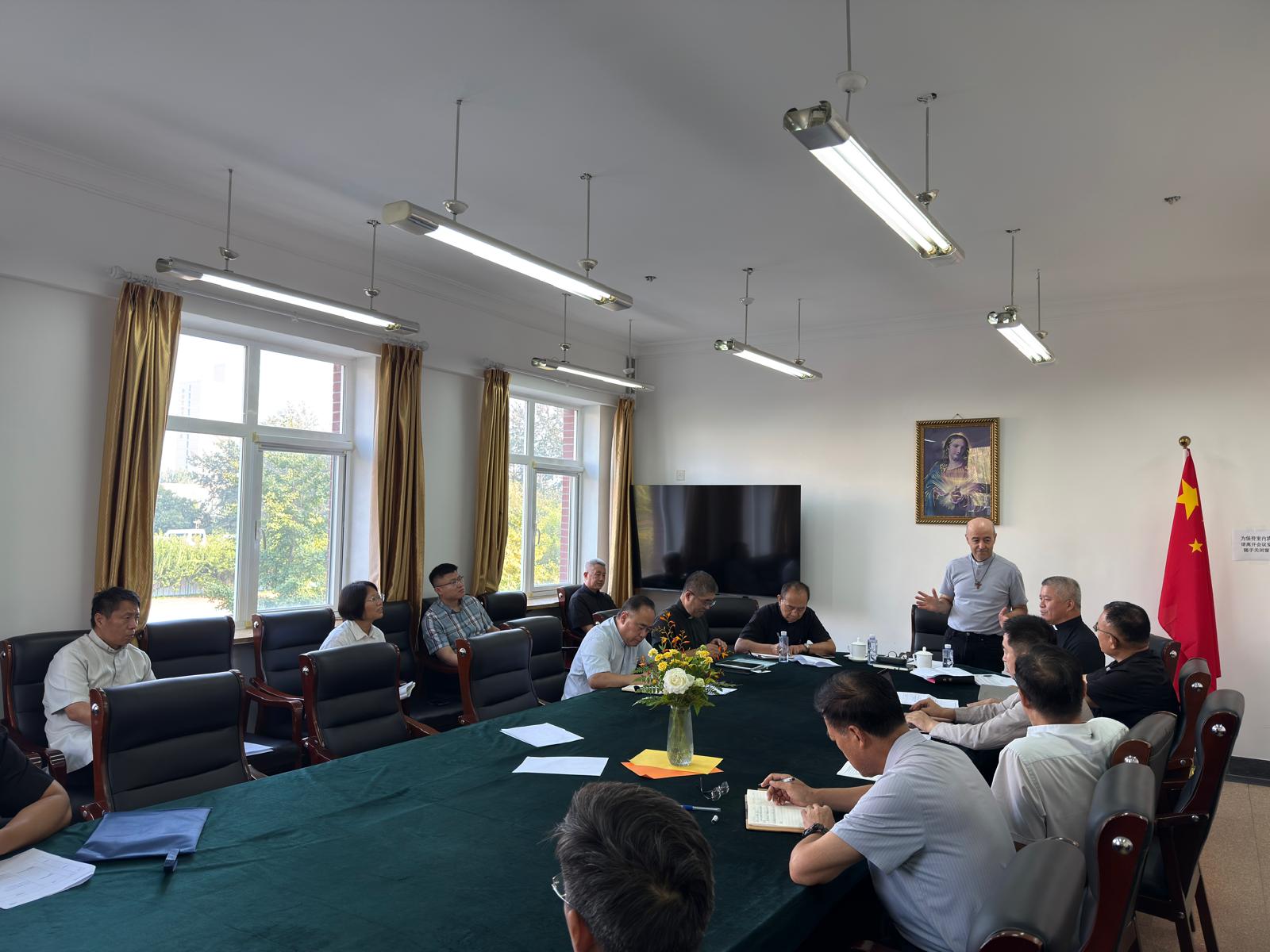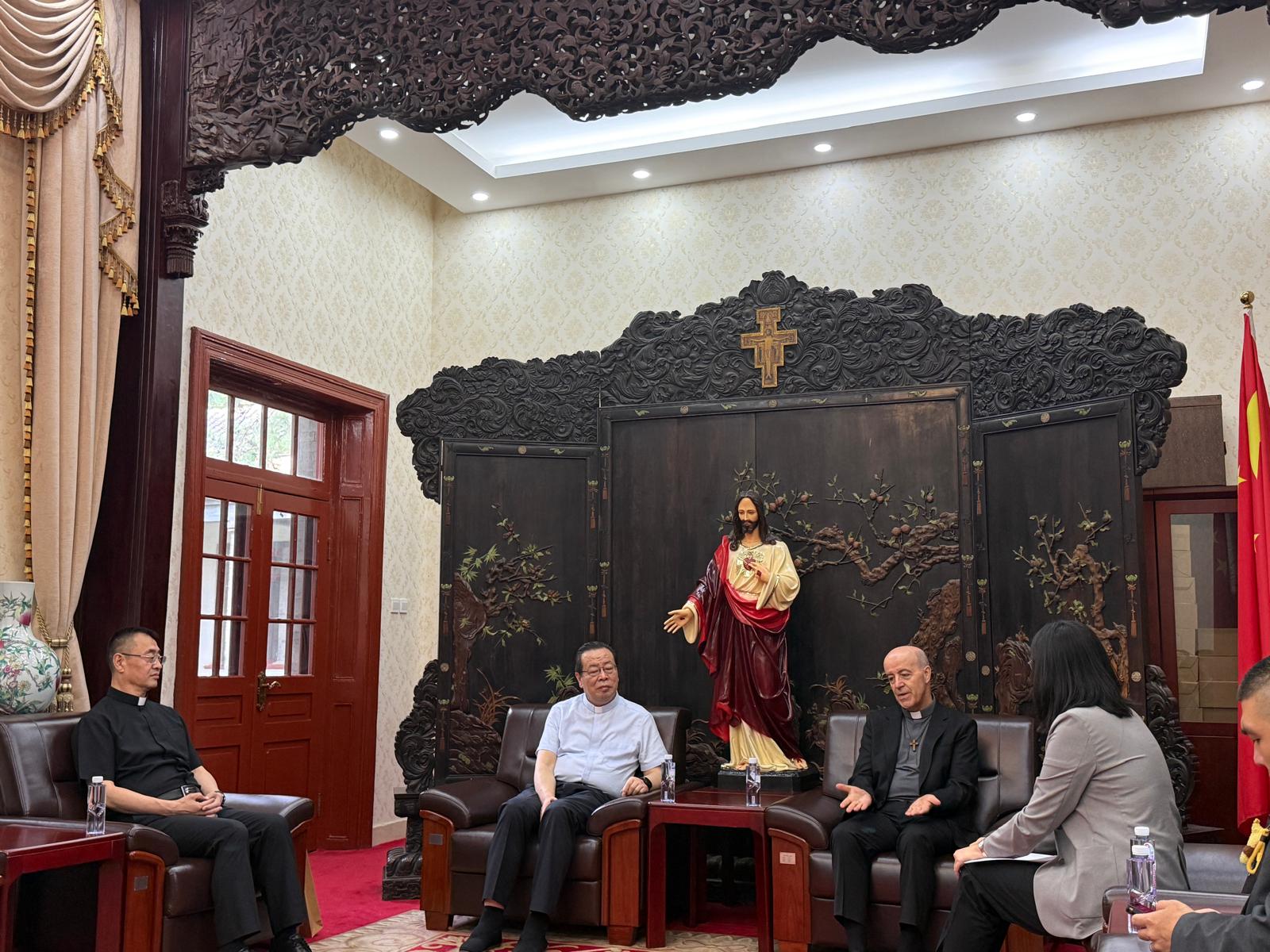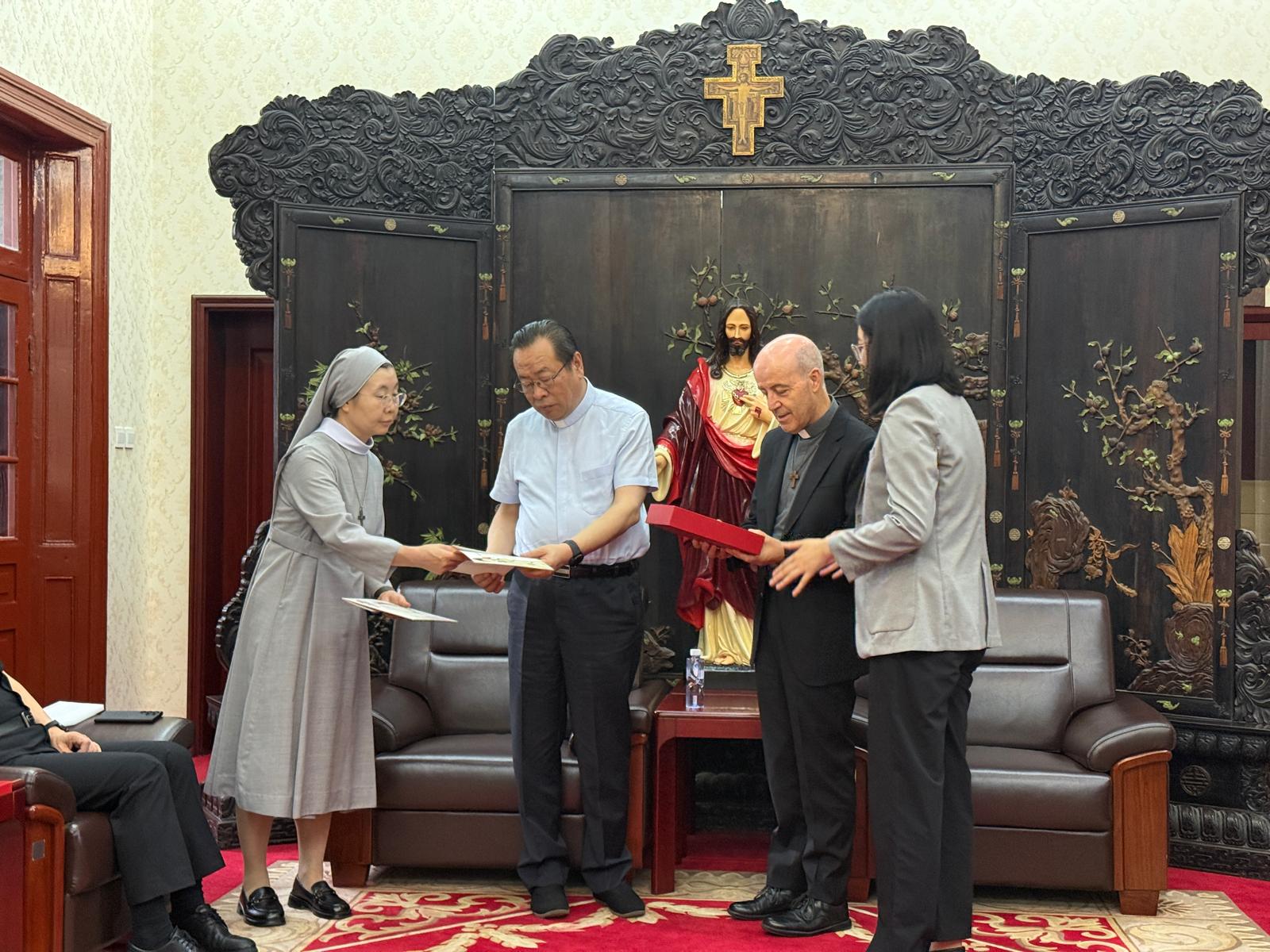


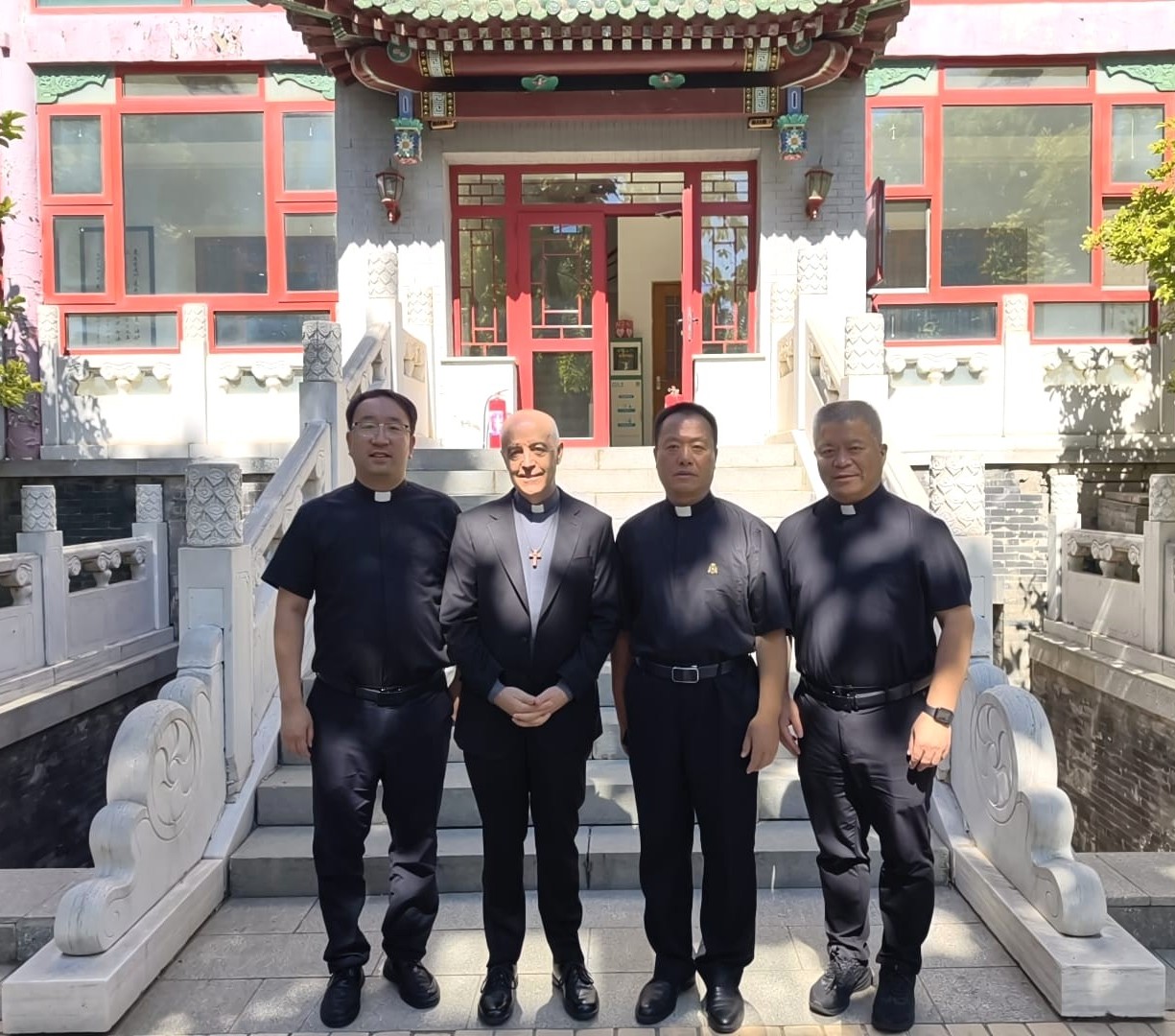
From 12 to 21 September 2026, Father Diego Martín Peñas, Director-General of the Prado, visited China at the invitation of the’Chinese Catholic Patriotic Association, represented by Bishop Joseph Guo. This official visit included meetings with leaders of the local Catholic Church, discussions with tutors at the National Major Seminary, and a spiritual retreat with 25 priest-tutors. This mission opens up new prospects for collaboration regarding the formation and spirituality of diocesan priests in the country.
Meeting with Bishop Joseph Guo
This visit was part of an effort to strengthen ties with leaders of the Catholic Church in China, in particular those from the Chinese Catholic Patriotic Association, the Bishops’ Conference, the National Major Seminary and the Diocese of Beijing.
During his visit to the National Major Seminary, Fr Diego was able to gain a more practical insight into the reality of the Church in China, exchange views with its leaders and meet priests involved in the formation of future generations.
His visit also included visits to several parishes in Beijing, which are at the heart of diverse social realities, some of which are characterised by precarious living conditions. These visits provided an opportunity to discover the vitality of the prayer and pastoral action groups, as well as the commitment of priests, deacons and laypeople to serving their communities.
A spiritual retreat centred on Father Chevrier
On 16, 17 and 18 September, Fr Diego Martín Peñas led a spiritual retreat attended by 25 priests, all of whom are lecturers at the National Major Seminary.
Held under the theme «Follow me», this retreat drew on the spirituality of Blessed Antoine Chevrier. The meditations also provided an opportunity to explore various aspects of the spirituality of the diocesan priest, in line with the conciliar decree Presbyterorum Ordinis.
Each day was punctuated by prayer and the celebration of the Eucharist with the seminarians. In the evening, a time of Eucharistic adoration gave the participants the opportunity to share the fruits of their prayer.
These days provided an opportunity for personal meetings with the seminary’s teachers, whose high standard of training and eagerness to learn more about the Prado were highlighted by the Director.
Training diocesan priests in the spirituality of El Prado
On 19 September, Fr Diego Martín Peñas met Bishop Joseph Li Shan, Archbishop of Beijing, his auxiliary bishop, Bishop Matthieu Zhen Xuebin, as well as diocesan officials. These discussions served to clarify the shared commitment to strengthening ties between the Church in China and the Prado Institute.
Chinese officials have, in particular, emphasised their interest in the Prado’s proposal for the training of priests. They appreciate that the Prado contributes to their training whilst respecting their link with their bishop and their own vocation as diocesan priests.
The positive experiences they have had in the past with priests from the Prado who have worked in China also reinforce their desire to continue this collaboration.
Outlook for the future
During this visit, several avenues for cooperation between the Church in China and the Prado Institute were discussed with a view to 2027.
Father Diego Martín Peñas also visited the diocesan seminary in Beijing, where 20 seminarians are continuing their training, as well as several parishes in the capital. These visits helped to deepen mutual understanding and open up new opportunities for exchange.
Strengthening ties and deepening the Pradosian educational experience
At the end of his visit, Fr Diego Martín Peñas shared with those who had accompanied him the joy and hope of being able to continue the relationships forged during this visit.
In particular, regular exchanges are planned with Father Joseph Yuan, a Prado priest, and Joseph Yiu, who is closely associated with the Prado, with a view to exploring various aspects of Prado formation in greater depth.
This visit marks an important step in strengthening ties between the Prado and the Catholic Church in China. It opens up promising prospects for the formation of priests, their spiritual life and their pastoral mission, in keeping with Father Chevrier’s vision.