

«Blessed Antoine Chevrier: Following Jesus in his poverty»
MONGOLIA
STÉPHAN KIM SEON-HYUN (Korea 1968 – Mongolia 2023)

Born in 1968, the father Stéphan Kim Seong-hyun He came to know Christ within his Christian community and heeded his call. Ordained a priest in 1998 (Diocese of Daejeon – South Korea), he chose to leave in 2000 to serve as a «fidei donum» missionary priest in Mongolia.
He died on 26 May 2023 at the age of 45 in Ulaanbaatar (Mongolia), where he had spent almost his entire life as a priest serving the most disadvantaged.
Please take the time to watch the video entitled
«The Winds of the Mongolian Steppe 2: “Who is the priest?” | Fr Sung Hyun KIM, a priest in the spirit of the Gospel».
BRAZIL
FELIPE CROMBREKE
«My name is Filip Cromheecke; I am a Fidei Donum priest from the Diocese of Antwerp in Belgium, and I have been living in Brazil since 1991. I felt called to serve the poor in accordance with the Gospel as a missionary disciple, and I decided to go to Brazil. Shortly after my arrival, I met the priests of Prado. I was moved by their simplicity, their brotherhood and their deep bond with Jesus Christ. Like them, I wanted to follow Jesus more closely in the manger, on the cross and in the Eucharist, and to be part of their brotherhood.
I began working in the suburbs of Salvador de Bahia, where the Lemos Brito prison complex is located. I saw the prisoners and their families as sheep without a shepherd, and I began visiting prisons. A whole new world opened up to me, one in which reconciliation and forgiveness are essential to starting a new life.
Recognising the presence of Christ in these prisoners, despite the crimes they had committed, was the first step towards drawing closer, without judgement, to the cross and the suffering of Jesus Christ. Whilst supporting former prisoners in their reintegration into society, I have witnessed their resurrection on several occasions. I identified with Father Chevrier when he decided to cross the Rhône to remain amongst the poor and begin a ministry with abandoned and exploited children who did not yet know Jesus Christ.
I am called to be another Christ and to pass on his love to the little ones. The poor evangelise me, make me more humble, help me to see my weaknesses and inspire me to put the Gospel into practice every day. I give thanks to God who sustains me and has made me aware of the charism of the Prado, which Father Antoine Chevrier passed on to us through his love for Jesus Christ – poor, humble and devoted to the very end.»


RAIMUNDO SOARES
«My name is Raimundo Soares dos Santos, I am 55 years old… I am a priest in a diocese in the state of Bahia (Jacquié), serving the diocese of «Conceição do Araguaia» in the state of Pará, in central Brazil.”.
I was ordained a priest with the desire to serve Jesus Christ more closely amongst the poor, as our Blessed Antoine Chevrier taught us. I feel called as a priest to go where my brothers do not wish to go. I have always wanted to go on mission to poor dioceses in need of priests. That is why I went to a diocese where there are few priests, a long way from my home region.
In our parish, we have the «Works of Mercy» and the «Emmaus Paths», which are services for the poor. For young people, we offer vocational training courses: joinery and carpentry, and for girls, a beauty salon. Once they’ve finished the courses, they go out to work to earn money and help their families. For children, we offer tuition support and IT lessons during the mid-morning and mid-afternoon breaks.»


COLOMBIA
SERGIO DUQUE, PRIEST FROM MEDELLÍN (1948–2021)
Prado’s spirituality became, within him, a way of living and acting. Sergio lived, acted and thought as «a faithful disciple of Jesus Christ», and on that basis, he embraced his life as a priest, a scholar and a teacher, but also as a friend and a member of the presbyterate, as a parish priest and as Assistant General of the Prado. His approach to studying the Gospel was admirable, as was his knowledge of the Prado’s sources, such as Father Chevrier’s letters, his spiritual writings, and his life.
A man faithful to the Spirit. Sergio was convinced that it was the Spirit of the Risen One who drives the history of believers. That is why he never lost heart in the face of adversity. We must not take a pessimistic view. God can always breathe life into dry bones.
A peacemaker : In the 1990s, whilst civil war was raging in the neighbourhoods of his parish, Sergio helped broker a peace agreement between the opposing factions, whose conflict had claimed the lives of many young people… Because one must never give in to difficulties, nor grow weary of waiting or hoping.
A man of evangelical transparency. With a humble demeanour, a shy smile, yet a heart as clear as crystal, he always lived a simple life. He lived and died as a poor man. He leaves us as his legacy his humanity, the sincerity of his faith, his unconditional devotion to Jesus Christ, his loyalty to the Church and to the poor, and his unwavering commitment to the Prado.
«Our family of disciples and apostles, who strive to follow Jesus more closely in his mercy, in accordance with the grace received through Antoine Chevrier, is a gift to the world’s poor, just as they are a gift to us; a gift for which we give thanks to God and which we wish to nurture with the tenderness of the Father and of Jesus!»

Please also visit the « HASTA LUEGO, SERGIO – Testimonials »from the Prado in Mexico to read and listen to the farewell messages to Father Sergio from Father Robert Daviaud (former General Director, priest of the Diocese of Luçon, France), Armando Pasqualotto (Former General Director, Priest of the Diocese of Treviso, Italy), Xosé Xulio Rodríguez (Priest of the Diocese of Ourense, Spain) or Héctor Villa (Priest of the Diocese of Ciudad Juárez, Mexico).
To listen to Fr.’s account. Fredy Ruiz (Co-ordinator of the Prado in Colombia), click here.
FRANCE
JOSEPH FOLLIET, a prominent figure in Lyon and across France, influenced by the Prado
Joseph Folliet was born in Lyon in 1903. A journalist by profession and a sociologist, he was the author of 65 books covering a variety of subjects: spirituality, history, sociology, poetry and theatre. He succeeded Marius Gonin as editor of *La Chronique sociale*, a journal and movement dedicated to Catholic thought and social action. From 1937 onwards, he was heavily involved in the *Semaines Sociales* and played a part in their post-war revival.
A man of both thought and action, he threw himself into the struggles of his time: as a member of the Resistance, he took part in the Christian Witness Journal alongside Pierre Chaillet. He was also involved in decolonisation and the Algerian War.
Driven by a deep faith in the Church and in Christ, and steeped in Franciscan spirituality, he co-founded the Companions of Saint Francis in 1927 with René Beaugey. At the age of 65, he became a priest at the Prado, having aspired to the priesthood all his life. He died at the Prado house in Limonest in 1972.

Watch this space...
Priests involved in interfaith dialogue in France and elsewhere, by Father Christian Delorme. As well as other figures such as:
- Pierre Marmilloud, the Diocese of Annecy, in Bolivia, where he works with the miners at the Potosí mine.
- Emile Granger, Diocese of Saint-Étienne, theologian and educator of young people in the care of the courts.
- Bishop Jacques Despierre, Bishop Emeritus of Carcassonne. A gem of a man!
PRADO WOMEN’S INSTITUTE (IFP)
MARIA JESUS HEREZA CUELLAR (LEGANÉS, SPAIN 1918–1986)
María Jesús was the founder of the IFP in Spain. She discovered the Prado thanks to some French priests who were visiting Madrid, at a time when the Prado had not yet been established in Spain.
At the age of 13, she felt the Lord’s call to religious life, and more specifically to a missionary vocation. However, as the Second World War had already begun, she put her desire to take her vows on hold and embarked on a course of study in medicine, which she felt was best suited to her aspiration to serve.
She was subsequently sent to Cameroon, but had to return to Spain for health reasons. She died on 24 October 1986, shortly after returning from the beatification of Father Chevrier, following a fall in Limonest and an operation in Madrid.
She had set up practice as a doctor in Leganés, on the outskirts of Madrid. Her concern for the poor and those in need led her to undertake continuous professional development so that she could provide high-quality care to those who were deprived of it.
Her home was open to everyone, regardless of their opinions or beliefs. In particular, she took in single pregnant women who had been abandoned by their partners, who wanted to keep their babies but had been rejected by their families. She offered them support, accommodation, practical help and sometimes even a job.
Despite suffering from a heart condition all her life, she devoted herself entirely to helping others, even going so far as to donate her body to science. In her neighbourhood, she was known as «the doctor of the city’s most working-class neighbourhood» or «the saint of our neighbourhood».
After her death, the local residents asked the municipal authorities to name the neighbourhood’s new health centre after her, a request which was granted. Even today, in Leganés, she is remembered for a life entirely devoted to medicine and to the poor.
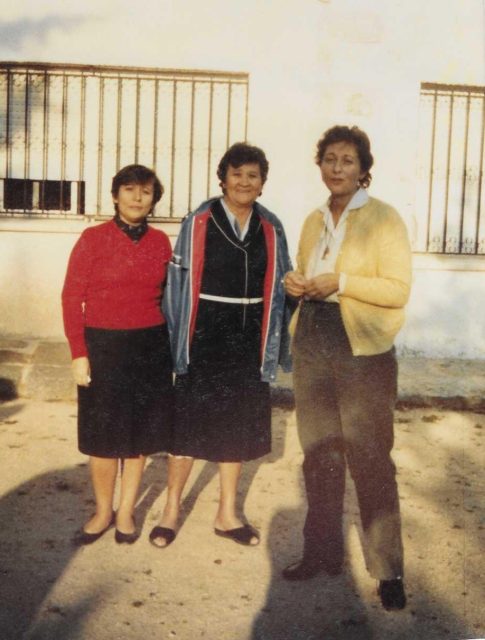
MARCELLE SEMIN (METZ, FRANCE 1920–2016)
Marcelle watched as the blocks of flats in her neighbourhood of Borny in Metz sprang up on the land where her father worked as a farm labourer. Remaining true to her rural roots through her involvement with the CMR, Marcelle, a social and family economics adviser, was deeply involved in the social, community and church life of her working-class neighbourhood. Among other things, she had set up a community grocery shop and cooking workshops there with women in precarious circumstances. One cause was particularly close to her heart: « We must act not for, but with, the poor. This «with» can be achieved through our participation in collective action. Let them speak for themselves, even if their words are clumsy, and let us not speak on their behalf ». She was captivated by Jesus Christ, and he was the driving force behind everything she did! She tirelessly sought to deepen her knowledge of Jesus, to grow in her intimacy with him and to acquire a keen understanding of her faith, taking part in numerous training courses (professional, organised by the CMR, the diocese and the Prado).
She said: « It is a matter of approaching the texts of Scripture with respect, placing them in their context whilst seeking a language of faith for people today. »Having served four terms as General Director of the IFP, she left a lasting mark on her institute. She was a woman of strong character and high standards; she knew how to inspire each individual to give their very best so that they might live out their vocation to the full. Together with her Council, she fostered a vibrant team spirit and organised invigorating training sessions led by priests from the Prado. She was deeply involved in drafting the constitutions, which were recognised by the Diocese of Lyon in March 1992. She ensured that every member was involved in the discussion and drafting of these documents.
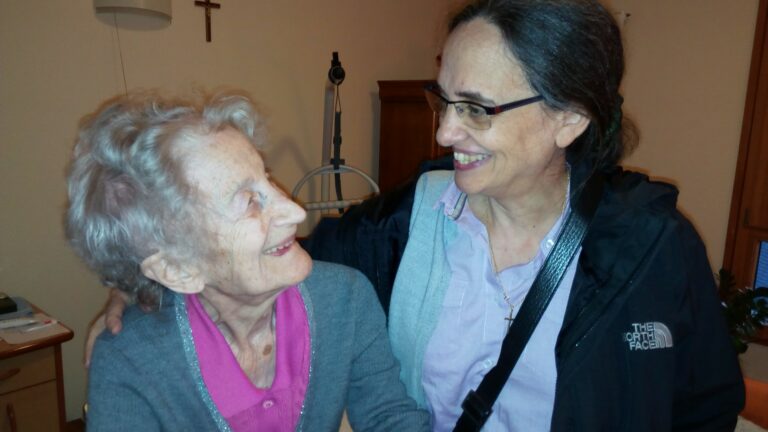
MARY ISHAC SEDRAK (CAIRO, EGYPT 1973– )

Born in Cairo in 1973, she is a social worker. She took her perpetual vows with the IFP in 2017. Through her work, she has contributed to the education of illiterate adults in Egypt. Today, drawing on her previous experience in adult literacy and working with deaf people, Mary is dedicated to the education of deaf children and is currently developing a new method to teach them to read and write (rather than merely understanding sign language), involving deaf teachers and the children’s mothers.

