
«Blessed Antoine Chevrier: Following Jesus in his poverty»
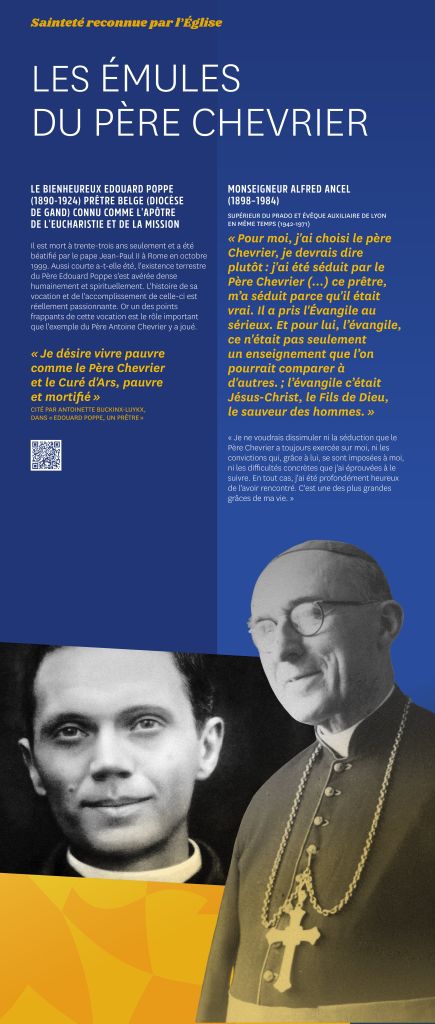
Blessed Edouard Poppe (1890–1924)
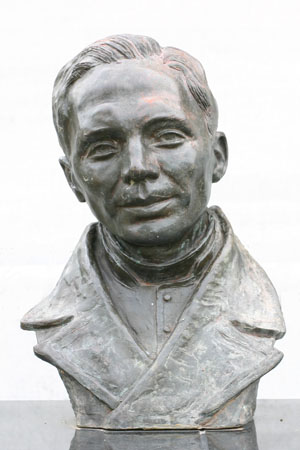
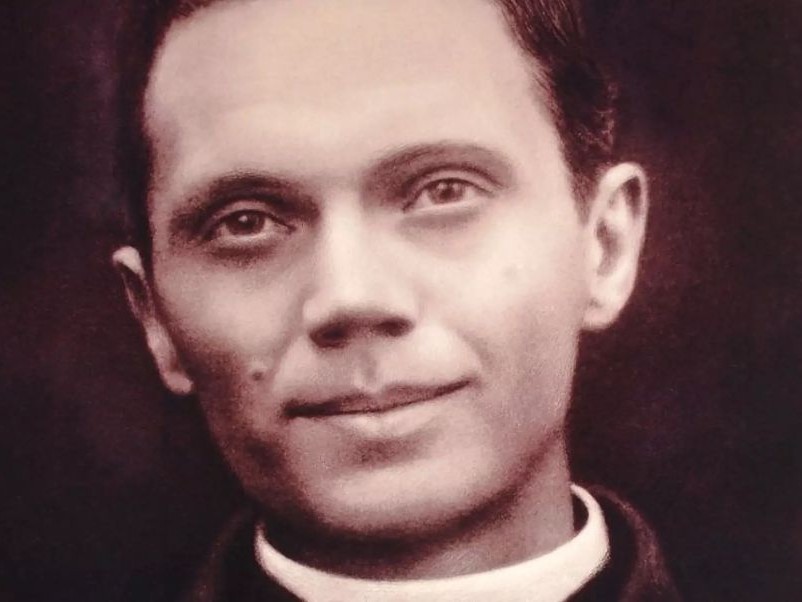
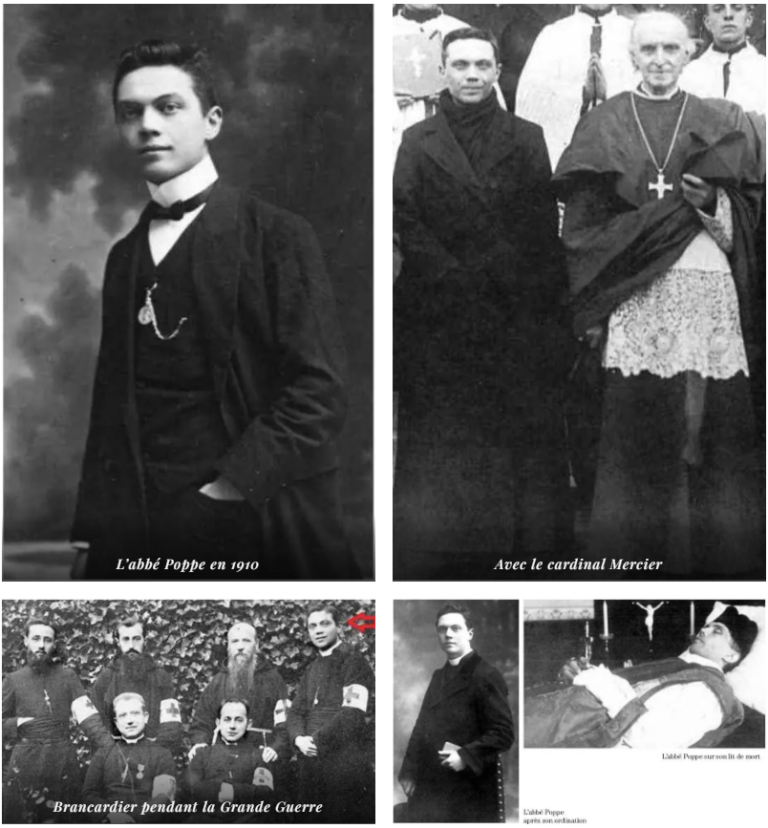
Blessed Father Edouard Poppe was a Belgian diocesan priest who died at the age of just thirty-three and was beatified by Pope John Paul II in Rome in October 1999. The eternal youth of this Flemish priest, the beauty of his gentle and radiant face—which a few photographers have left us as a legacy—and, even more so, his manifest holiness are, indeed, likely to inspire young people who are drawn to the absolute and eager to devote their lives entirely to Christ Jesus.
However short it may have been, Father Edouard Poppe’s earthly life proved to be a full and rich one, both humanly and spiritually. The story of his vocation and its fulfilment is truly fascinating. One of the striking aspects of this vocation, however, is the significant role played by the example of Father Antoine Chevrier, and this deserves our full attention. Pope John Paul II himself was keenly aware of this when, during the audience on 4 October 1999 in Rome, he declared: «Father Poppe had made his own the motto and the desire for poverty and humility of Blessed Antoine Chevrier: «My life is Jesus Christ».’.
All those who knew him or studied his life’s journey and have written about Edouard Poppe bear witness to this: from that retreat onwards, the seminarian took Father Chevrier as his role model, and he would later become «a poor priest for the poor» following his example. In the resolutions he drew up after his ordination as a deacon, we read: « The fire of my love cannot be quenched. Lord, is it fear or vanity that makes me long to become a fervent priest? I wish to live in poverty like Father Chevrier and the Curé d’Ars, in poverty and self-denial » [1].
In his diary, he wrote: « Poverty, my sister, my wife… Jesus, in Nazareth you lived in poverty; you worked with your own hands. Yet, whilst the time for preaching was so precious, you deemed poverty, humility, self-effacement and submission to be more beneficial to souls for thirty years: otherwise you would have preached sooner, since at the age of twelve you were already astonishing the Doctors with your wisdom. And I, your disciple, should I be ashamed of being poor? Your apostles, the Curé d’Ars and Father Chevrier, were poor, and they converted people, even the very richest. Why should I not do the same? » [2].
According to Father Odilon Jacobs [3], a very close friend of Edouard Poppe, who had read Father Chevrier’s biography on at least two occasions. In 1979, Monsignor Léonce-Albert Van Peteghem, then Bishop of Ghent, wrote that his predecessor during the years 1910–1920, Bishop Seghers, and Cardinal Désiré Mercier, Archbishop of Mechelen and Primate of Belgium at the same time, regarded Father Poppe «as a follower in the footsteps of the Curé d’Ars, as a new Father Chevrier» [4].
Some things they have in common:
An advocate for the first communion of poor children
As soon as he arrived at the parish, the parish priest entrusted him with the care of the children. His aim was to keep the children occupied in a wholesome way during the school holidays, and he was keen to combine leisure activities with some religious instruction and guidance in prayer. His charisma was such that children came in their tens and even hundreds. For them, he gradually developed an original method of catechism. With his parish priest’s permission, Father Poppe founded, in 1917, a Communion League intended to be «an association of children who love Jesus and who wish to sanctify themselves by supporting one another and setting a good example wherever they go». Within a few months, ninety children had joined the movement, and in June, on the feast of the Sacred Heart of Jesus, twenty-one children aged between five and six, from poor families, received their First Communion, to everyone’s delight.
Priest trainer
In September 1922, having been informed of Abbé Poppe’s spiritual depth and taking advantage of an improvement in his health, Cardinal Mercier appointed him as spiritual director of the four hundred and fifty seminarians who were then undertaking their military service at the Training Centre for stretcher-bearers and nurses at the Beverloo military camp (Bourg-Léopold) in Limburg. This ministry amongst future priests, in whose hearts burned a desire to help spread the Kingdom of God, filled Edouard with joy. As early as 1917, at the request of seminarians from Ghent, he had been instrumental in founding a priests’ circle and drawing up rules for such circles, and until his death he remained deeply concerned with the spiritual formation of priests. Father Poppe was demanding of those under his care, but his gentleness and kindness won their hearts, and many of them recognised him as a saint.
Later, the Belgian cardinal Joseph Cardijn, who founded the Young Christian Workers in 1925, wrote that «the influence that (Edouard Poppe) exerted (at the Beverloo camp) has remained legendary».
A huge crowd at his funeral
On 16 June 1924, Edouard Poppe’s funeral was held in the presence of more than two thousand worshippers. One hundred and twenty priests also made a point of attending, bearing witness to the influence the young priest had already exerted on their priestly lives.
Christian Delorme
(Priest at the Prado in Lyon)
[1] quoted by Antoinette Buckinx-Luykx, in «Edouard Poppe, a priest»
[2] quoted by Father Martial Lekeux in *La dure montée. Vie héroïque de l’abbé Edouard Poppe*«
[3] Odilon Jacobs, «Edouard Poppe: Priestly Joy»
[4] Foreword to the third edition of the biography of Father Martial Lekeux
To listen to the «Life of Blessed Édouard Poppe, Belgian priest, apostle of the Eucharist and of the Mission’ ( (1924) on *La Caverne du Pèlerin* ~ a Catholic publishing house, click here.
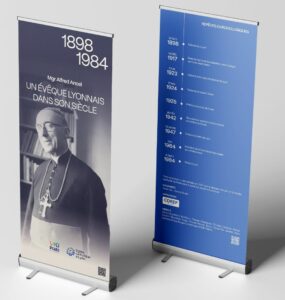
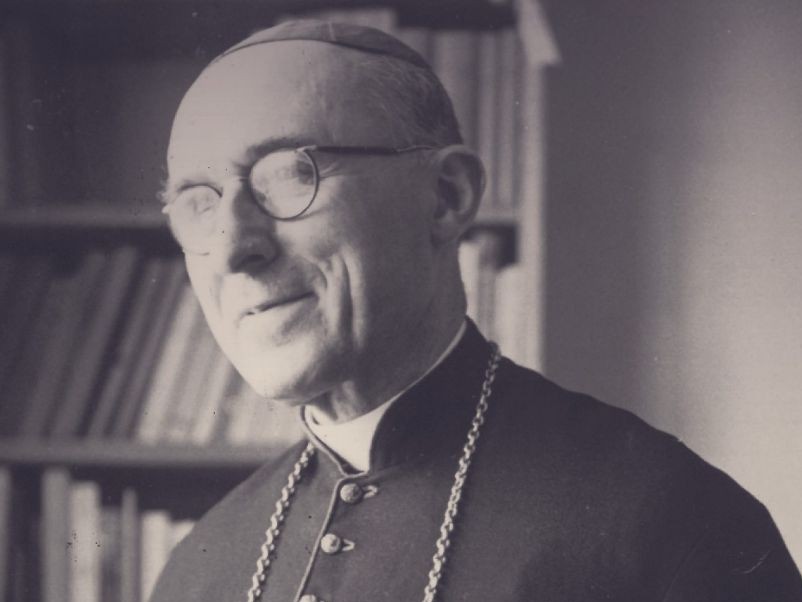
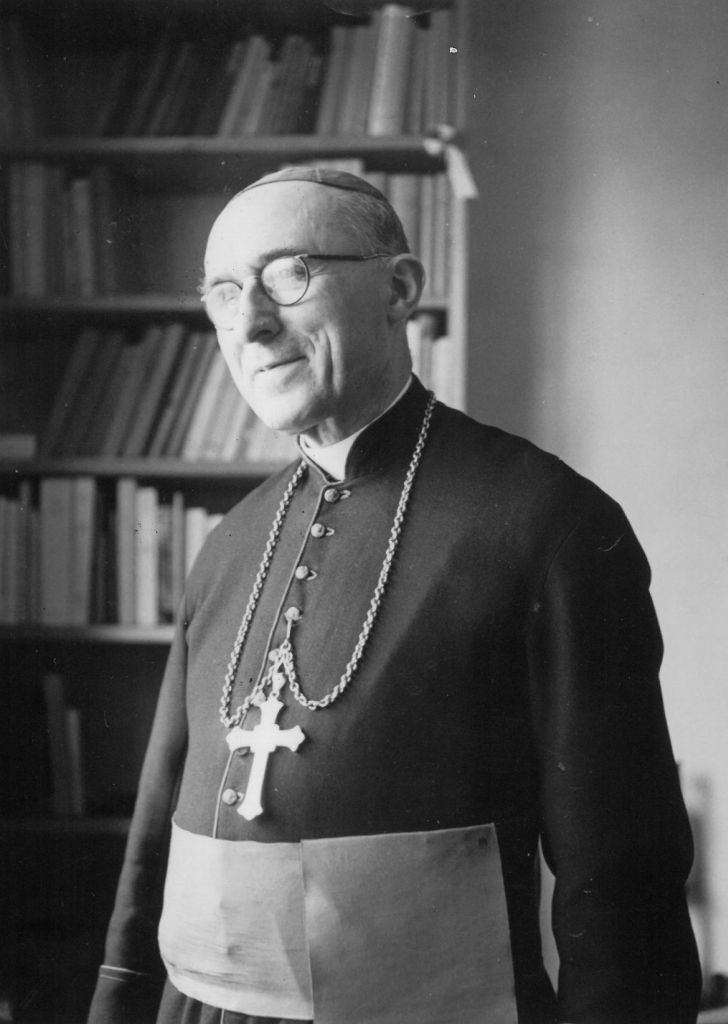
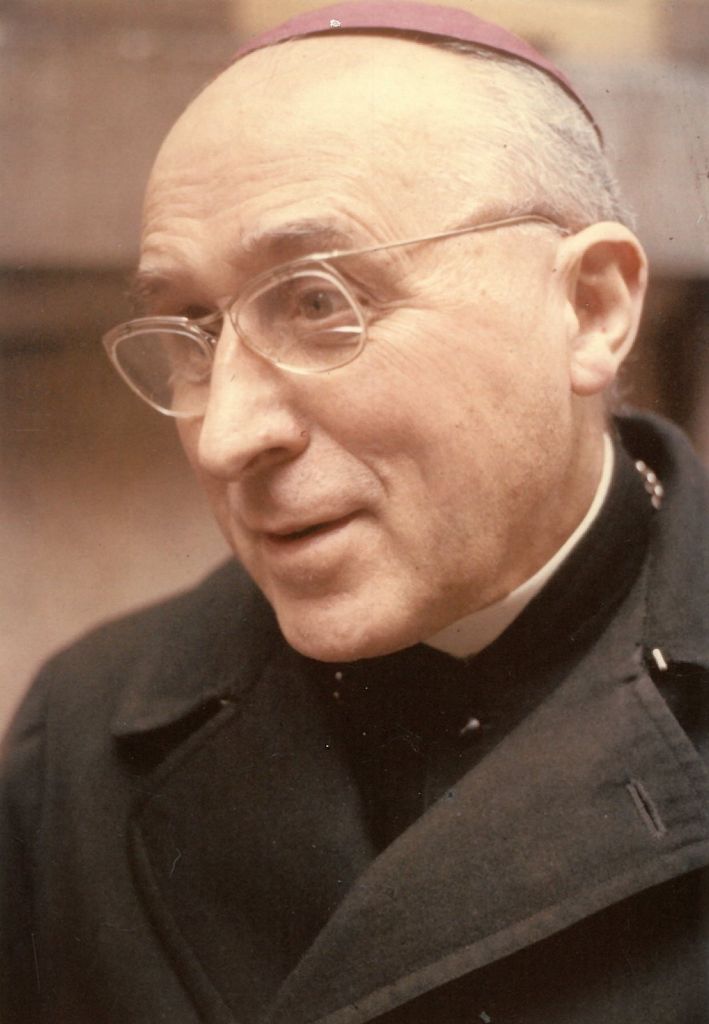
Bishop Alfred Ancel (1898–1984)
He served as superior of the Prado and auxiliary bishop of Lyon at the same time (1942–1971)
« As for me, I chose Father Chevrier – or rather, I should say: I was drawn to Father Chevrier (…) This priest drew me in because he was genuine. He took the Gospel seriously. And for him, the Gospel was not merely a set of teachings that could be compared with others; the Gospel was Jesus Christ, the Son of God, the Saviour of mankind.«
« I do not wish to conceal either the fascination that Father Chevrier has always held for me, or the convictions which, thanks to him, have taken root within me, or the practical difficulties I have experienced in following him. In any case, I have been deeply happy to have met him. It is one of the greatest blessings of my life.«
Some key aspects of Father Chevrier’s spirituality, according to Bishop ANCEL
Excerpt from « A. Ancel, a man dedicated to the Gospel » by Bishop Olivier de Berranger (pp. 71 and 74).
«Father Chevrier’s aim is to train apostles… one thought dominates his entire inner life: to know, to love, to act. To know, one must study – not in a dry, academic way – and prayer must permeate one’s study.».
«Prayer—that is to say, prolonged prayer in communion with Christ—is a task for the apostles: «to teach»—let us not forget that. Even in prayer, knowledge of Our Lord must come first.’.
But not in an «abstract catechism», for Father Chevrier does not separate faith from love: «What is the point of understanding if one does not love?»
Prayer is therefore «the crux of the priestly life; it is less an inner elevation than a study of Our Lord in order to follow and imitate him», for it is there that, »having found the secret of his own transformation into Jesus Christ», he had also found the secret of touching souls’.
«Father Chevrier, humble as he was, had to acknowledge that this work was a great one, that it came from God, and that it was bound to have a bright future.».
Father Ancel summarises in three points for the seminarians what was «profoundly original» about Father Chevrier’s doctrine.
- »Pradosian spirituality is a spirituality based on perfection through the practice of the evangelical counsels whilst living in the world’;
- it is a spirituality of apostolate;
- The Prado apostolate consists, in particular, of «living out the Gospel in parish life for the poorest».
The originality of Father Chevrier’s method of apostolate
Excerpt from « The Poverty of the Priest »from’Alfred Ancel (1939), published by the Prado, Madrid, 2021 (p. 96).
«As for the originality of Father Chevrier’s method of apostolate, one might say that it is not original at all, since it merely applied the principles of divine pedagogy as found in the Gospel. But the most difficult part of it all is finding these rules! It is necessary to to understand that incarnation is the quintessential method of apostolate : to humble oneself in order to be exalted, to become poor in order to enrich, to disappear in order to reveal oneself, to die in order to give life. Father Chevrier did not reason on the basis of the Gospel. But he approached it with a very great love and understood it.».
See also the extract from the book « The Prado: Father Chevrier’s Apostolic Spirituality » (Pages 18–19).
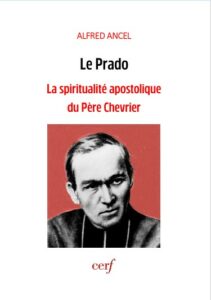
We do, in fact, need concrete role models who, in a sense, reflect the character of Jesus and his Apostles in a way that is accessible to us[1]. We need to be shaken out of our laziness or our lack of confidence. Looking at them, we might say to ourselves: ‘What this person has done – why shouldn’t I do the same?’
Father Chevrier used to say to Jesus Christ: «If you need a poor man, here I am; if you need a madman, here I am; here I am, O my God, to do your will». Why should we not follow his example? It is up to each of us to choose the model who will be our guide, helping us to follow the one Master, Jesus Christ, more faithfully.
As for me, I chose Father Chevrier – or rather, I should say: I was won over by Father Chevrier. In fact, because of my social background and culture, I was very different from him and, for a while, I even thought that Antoine Chevrier lacked stature. But this priest won me over because he was genuine. He took the Gospel seriously. And, for him, the Gospel was not merely a set of teachings that could be compared with others; the Gospel was Jesus Christ, the Son of God, the Saviour of mankind. Antoine Chevrier had given himself entirely to Jesus Christ; he wanted to follow Him closely, by becoming like Him. He wanted to lead with him, along the same path, those priests who would agree to join him. He had desired all this because God had asked him to, and also because the workers in his parish expected this of their priest. They wanted to see Jesus Christ in him.
Whilst he captivated me, Father Chevrier was always, to me, like a living reproach, for whilst he had managed to be true to himself, I could not manage to be true to myself as he was. Not only did I feel my own inner resistance to the demands of the Gospel, but I also had the vague impression that I was putting on an act whenever I tried to live as he did. I am telling you all this because I do not wish to conceal either the fascination that Father Chevrier has always held for me, or the convictions which, thanks to him, have taken root within me, or the practical difficulties I have experienced in following him. In any case, I have been deeply happy to have met him. It is one of the greatest blessings of my life. What I have just told you, you would no doubt have discovered by reading my writings. I prefer to tell you frankly straight away.
I would also like to share with others the essence of what I have learnt from Father Chevrier. Since the call to follow Jesus Christ more closely is addressed to everyone today, albeit in different ways, tailored to each person’s life, I address all my brothers and sisters in the Church of God: bishops and priests, men and women religious, and lay Christians. I ask you to read this book whilst allowing yourselves to be challenged by Christ, each in your own circumstances and according to the grace you have received from God.
To you, Christian laypeople who, according to the teaching of the Council, are entrusted with «the stewardship of temporal affairs» (L.G. 31), I say quite simply: do not seek to imitate priests or religious; it is in your lives as laypeople, within your families, in your professional work and in your commitments that you are called to reveal Jesus Christ, by following Him more closely.
Jesus certainly did not marry; he gave up his professional work when he began to preach to the lost sheep of the house of Israel, and he never became politically active in the strict sense of the word. But if today he asks priests and religious to follow him in celibacy, and if he also asks them to devote themselves entirely, as he did, to the service of the Kingdom, he places them at your service to help you fulfil, in accordance with the Gospel, your irreplaceable mission as laypeople. Do not, therefore, seek to imitate priests and religious: your mission is to live out your lives as laypeople in accordance with the Gospel.
[1] I found a theological justification for what I have just said in a study by Bishop Jouassard on the priesthood in the time of the Fathers. Whilst by no means neglecting the laying on of hands, which is essential to the transmission of the priesthood, the Fathers placed great emphasis on the importance of imitating Christ: «direct imitation in the case of the Apostles, indirect imitation through the Apostles and their successors for those who would come after» (La Tradition sacerdotale, Mappus, 1959, p. 110). It is not only what Christ did at the Last Supper that the apostles and their successors are called to imitate, but the whole of Christ’s preaching and the whole of his life (pp. 109–110). Hence the concern to find priests to whom one can look for guidance, because they are «a replica of the true Priest» (pp. 112, 116, 123, 124).